



How many hours do you sit at a desk during your working day? Does your butt stay glued to the chair more than your feet ever get to tread the carpet? Or do you incorporate movement into your seated day?
While you think about the answers, please take a moment to subscribe for free, and then I shall continue:
The desk job dilemma
It’s long been established that prolonged sitting is bad for backs, but a recent 2025 study among office workers found that static sitting behaviour is more strongly associated with low back pain, than sitting which incorporates movement.
In my years as a full-time freelance journalist, I sat more than I moved. I was usually so foot-to-the-pedal with work, that I didn’t get up except for tea breaks and to walk the dog. Sometimes, in very busy periods or on a deadline, I could be at my desk for 10 hours.
Combined with the stress that sometimes a freelance journalist life could bring, my lifestyle ultimately played havoc with my bio-mechanics.
No gain, lots of pain
My shoulders and neck were sore all the time. Tension knots in my upper back and around my shoulder blades were hard to undo, even by the toughest and most painful deep tissue massage.
I had repetitive strain injury in my wrists. This could be agony at times. Affecting such a small part of the body, RSI sure made a big noise. I got it in my hands, too, from using my mouse.
Then came the back pain. Gnawing across my lower back. It drove me mad as I struggled all day to reposition myself in a way that it wouldn’t hurt.
After sleep, some days I’d wake up feeling like the aches had eased. However, after a couple of hours back at my desk, the nerve twinges were pinging again, and the knots were balling tighter.
Sound familiar? Well, if it’s any consolation, I no longer have low back pain. Admittedly, I sit nowhere near as much as I used to. But my posture and body are so much stronger now. This means that the longer periods I am sitting (like when writing this) are far more tolerable.
Quite a bit changed for me - not just my working life altogether, but my whole outlook to health and to what actually is a fitness routine.
Before we go on, let me unpack a few need-to-knows about why prolonged sitting - and static sitting especially - is a big old pain in the back.
The silent creep, pelvic tilt and ‘sleepy’ glutes
Have you ever heard of tissue creep? In simple terms, it is the lengthening and stretching of tissues such as muscles, tendons, and ligaments, when they are being forced into a continual position over time.
Sitting slouched in one position for hours on end means a low-level load is placed on the tissues in the back for a long period. Over time, this causes connective tissues to weaken and misalign, leading to muscle imbalances, strain and pain.
Combine this also with the fact that the body elsewhere is in a rigid position that it is not meant to be in for hours on end. Our bodies were made to move, not to be still.
The pelvis tilts backward when we sit. Over an extended duration, there is a load on the lower spine that isn’t being supported in the same way as if we were standing or moving. This load can cause issues in the lower vertebrae and muscles around the pelvis and lower back, further contributing to the incidence of low back pain.
Then we also have the fact that our glutes (the big muscles in our bums) - being sat on instead of being strengthened, start to weaken from disuse. One of their key jobs though, is to support the spine, so we need them strong. As I tell my back class participants, of all the muscles in the body that are most important to the back, it’s probably the glutes.
Ultimately, most people with low back pain that comes from prolonged sitting will likely have a combination of these disrupted biomechanisms going on. You might not know which exact part of the internal machinery is causing the most issue, but your body will certainly tell you where the most stress is.
To put another spanner in the works - sitting for long stretches doesn’t just affect your back. There’s a growing body of research on what it does to your heart, too, and this is even for people who exercise regularly. I’ll come back to this properly in a future piece.
So, how do we fix it?
The good news is, for the majority of people, a holistic approach to spine hygiene and back strengthening generally works. The body moves together in all its amazing ways, and isolation of individual parts in a treatment plan is usually not necessary, or only for very rare cases.
Overall, I’ve generally gone for a ‘total body’ approach in most areas of my client programming - because it corrects imbalances and stops them developing, as well as the fact that every part of our body needs another part to also work properly.
However, before we delve into the physical - what about the environment we’re actually working in?
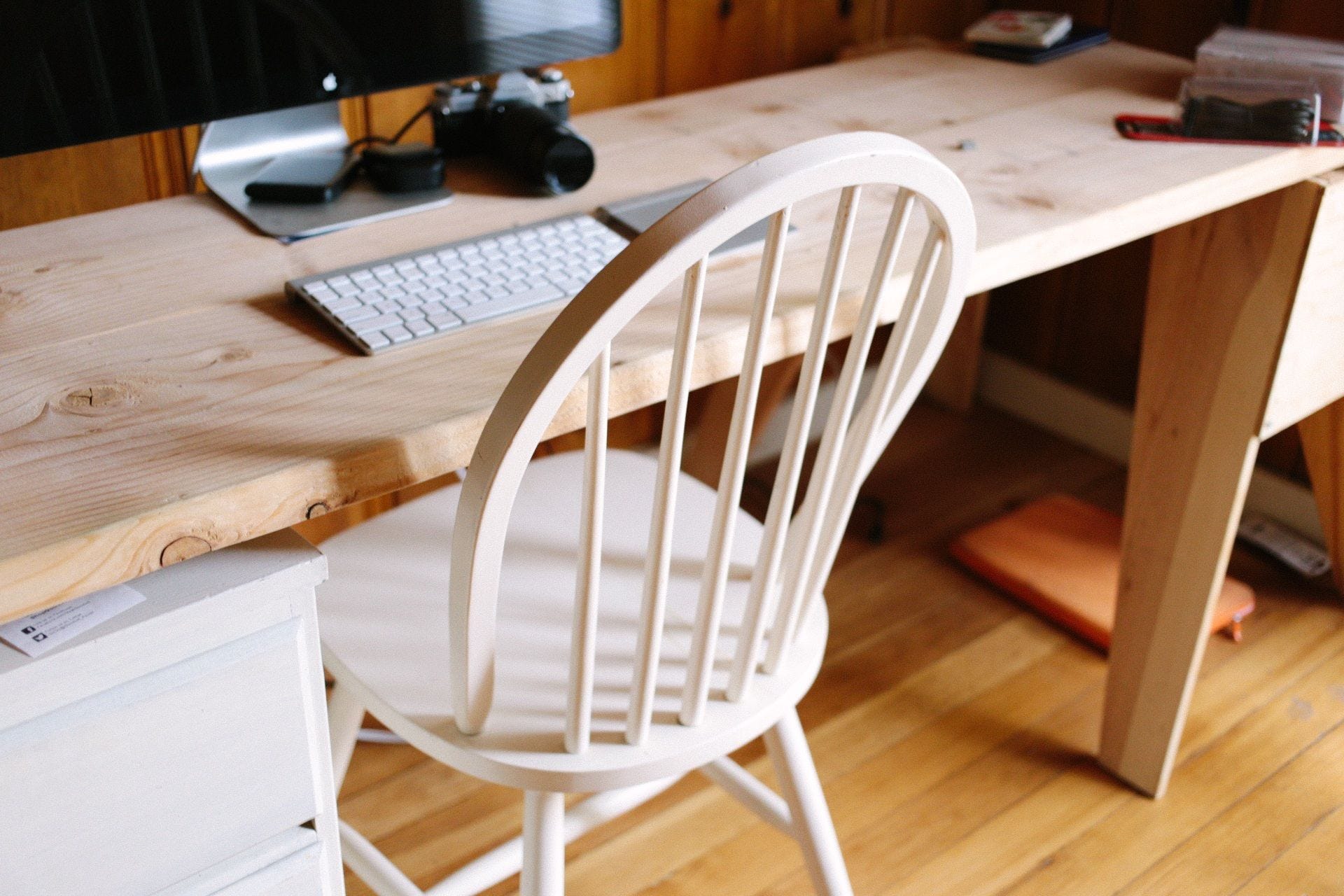
Ergomonics matter (but not as much as movement)
Going back to my experience, in those days where I was suffering substantially. I managed my setup. Gel rest for my arms, mouse pad with a rest. I bought a specialist ergonomic chair.
I even trained myself to use my mouse left-handed as well as right-handed, so I could switch over when I needed to rest one hand. I also bought wrist splints to sleep in at night, which helped to immobilise my wrists and forearms to give them rest.
It offered some light relief, and did make a difference to my working day. Especially investing in a proper chair. Of course, now, standing desks are an option - in my old school journalist days, they were relatively unheard of. Although, I don’t have one, because it would mean a lot of reorganising of my space.
As well, new evidence shows us that it is our movement patterns that matter more - breaking from a static position frequently is more beneficial than either sitting or standing statically.
In fact, standing statically for many hours also causes load to be placed on the lower back, and can contribute to lower back pain. So standing desks are not the magical solution we imagined.
All of these ideas - ergonomic chairs, wrist splints, gel rests - are only part of a solution to a bigger problem. Like putting scaffolding up around a house that’s cracking. The scaffolding will only hold it so long, you have to get down to the foundations to fix it.
So, what movement can help?
Firstly, anyone who is already appropriately strength training two or three times a week with a total body approach is going to be in a better position. Anything we do that keeps the muscles supporting the spine healthy and activated is obviously going to help reduce our chance of low back pain.
I use the word ‘appropriately’ above, though. I’ve had clients who started the gym without knowing what they’re doing. They go and attempt a macho deadlift way beyond their capacity. Hey presto - they put their back out. Well, I could have told you that was going to happen.
However, I can’t emphasise enough that getting into an actual strength training routine that is right for your body, where it’s at, is going to help you no end. If you subscribe to my publication, you will learn how I value strengthening over stretching, always.
I’m aware though that not everyone reading this is going to start strength training in the gym, or even at home. You want a few practical tips that will help you each day.
Become the tea runner (and other practical advice)
Maintaining a regular shift in posture is key to reducing the low back pain that comes from sitting. Active breaks take the pressure off the spine. Move for a few minutes at least every 30 minutes.
What kind of movement counts? Any that is practical! Get up, and jog or march on the spot. Run up and down stairs a few times. If you work from home or are in your own office, you have more options.
Do a few squats, star jumps and strong retractions of the arms and shoulders.
Keeping the blood pumping is also important, as noted above regarding cardiovascular health. But blood flowing into the tissues around the spine will also help reduce pain.
Find more ways to be active during the working day. Use any phone call as an opportunity to stand and walk. Become the tea runner in the office. Offer to do errands when the opportunities arise in a bid to move more.
For wrists and hands, try prayer presses. Put the hands together at the chest as if praying, and press really hard for a few seconds. Do a few reps, followed with some hand rotations at the wrist. Have a break from typing, and if you can, try a mouse hand swap.
‘Reactivate’ your glutes and release your pelvis!
Once you’ve finished your desk day - get into the habit of doing two key exercises:
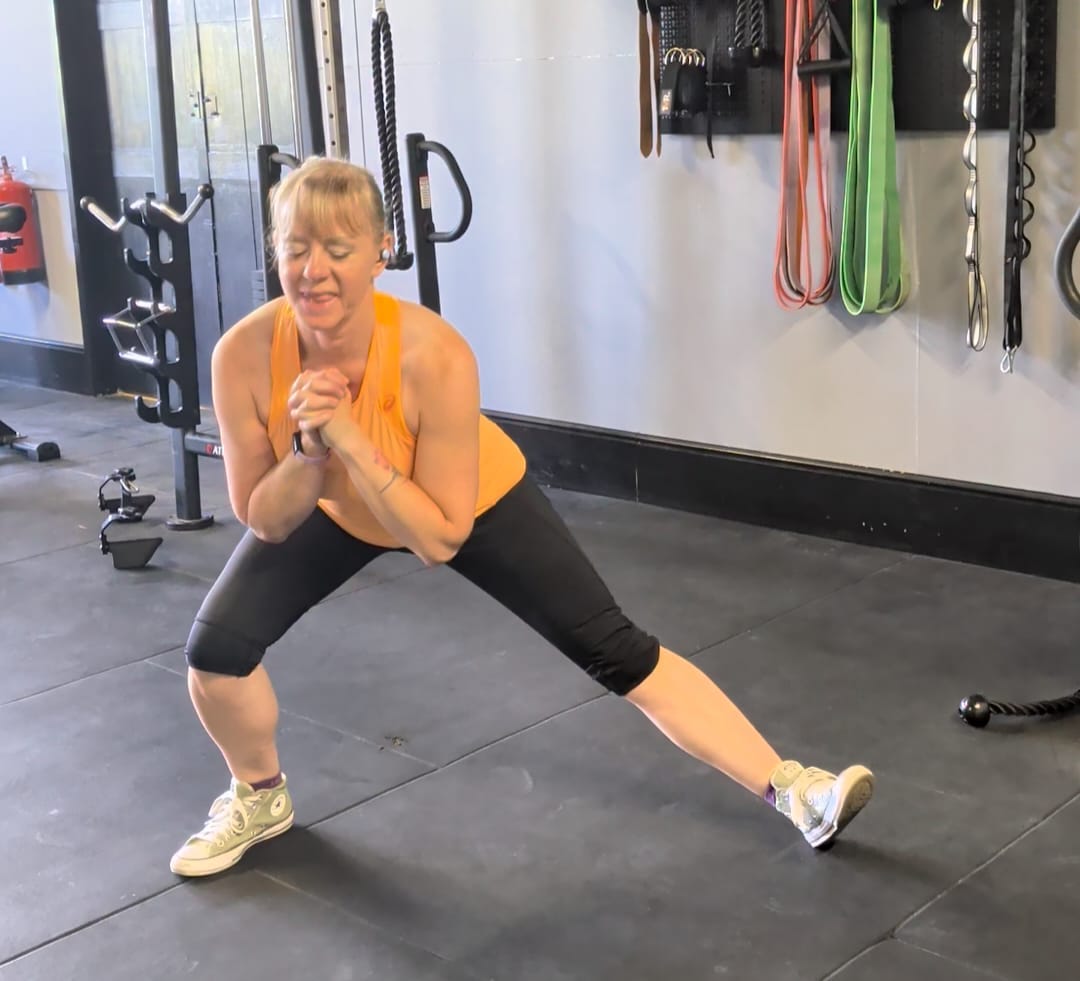
Cossack lunge - this is my favourite for opening the hips and helping to reposition the pelvis after a long day of sitting. It strengthens the legs and works wonders for the hip flexors. It’s a variation on the cossack squat, not as deep and easier for beginners. Because it’s a more demanding one to master, I’m giving you a video demonstration to help.
Do about 20 altogether (10 each side) and focus on form - you may well feel a lot of relief from the pressure of sitting after doing just a few of these, too.
NOTE: This is a fairly demanding exercise for newbies. If you have limited balance or hip mobility, try holding a chair when doing it. An alternative can be alternate side lunges - stepping into a side lunge, stepping back to the middle, then stepping into a lunge on the other side. Taking your time to pause in the middle, rather than trying to move quickly from one side to the other.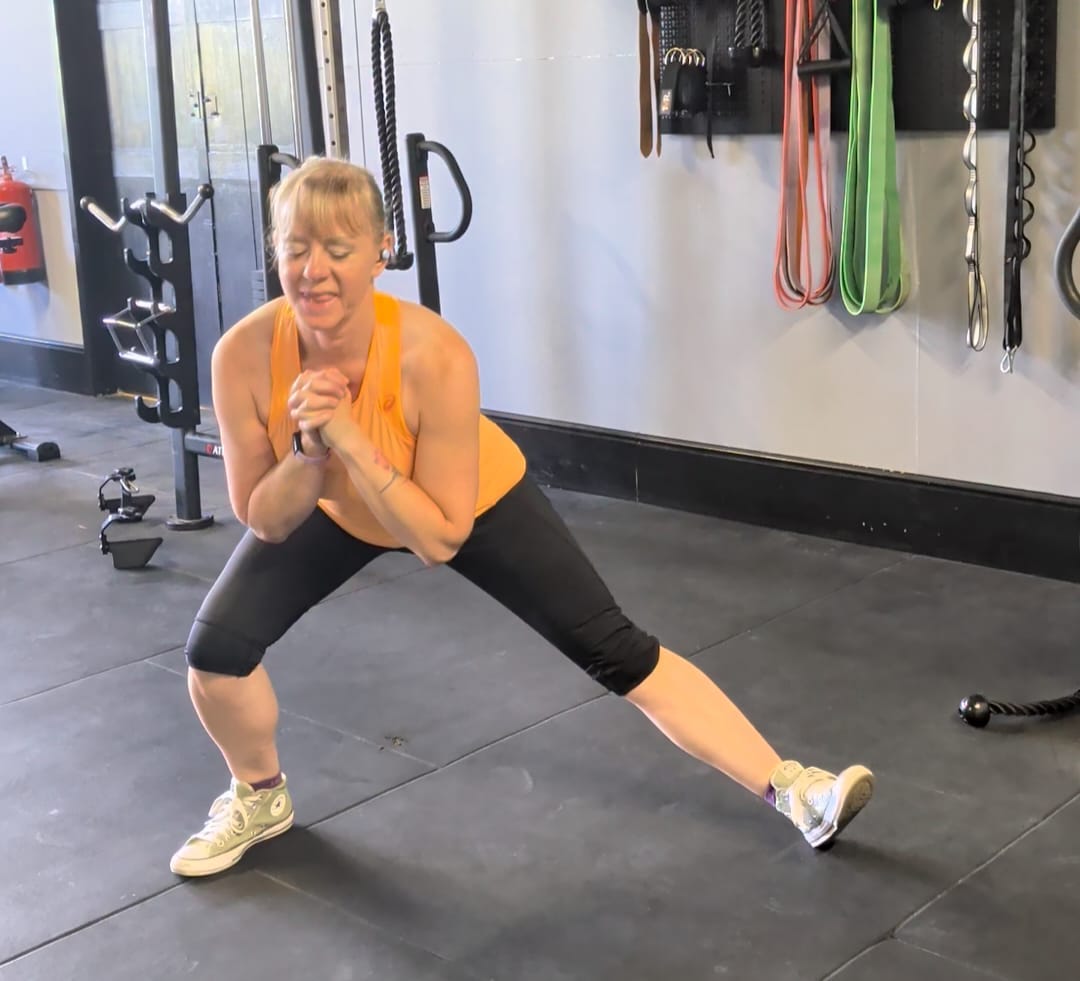
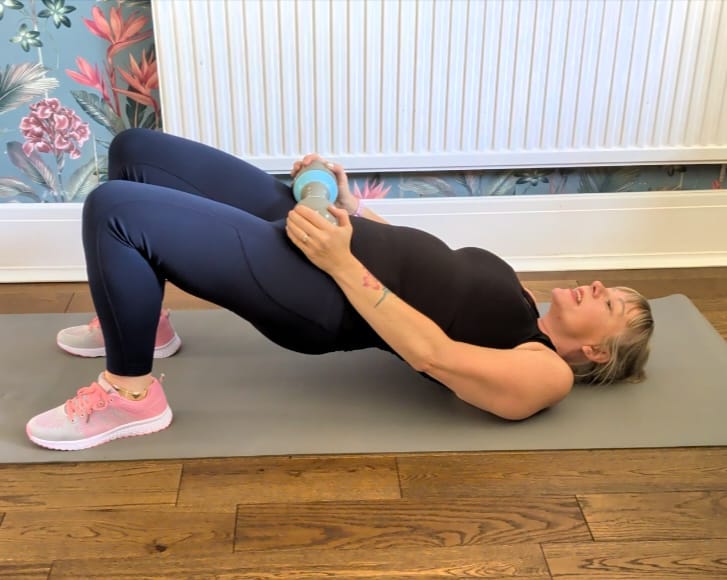
Glute bridge - a number one exercise for glute strengthening. Lie down on a mat or carpet, palms positioned downwards, knees bent, heels close to the bum. Squeeze the bum while pushing the body up, so the belly button is high. Keep squeezing for a few seconds, then relax and lower. Do 5-10 reps for 2 sets.
NOTE: As you get stronger, you can hold a weight at your lap to add load.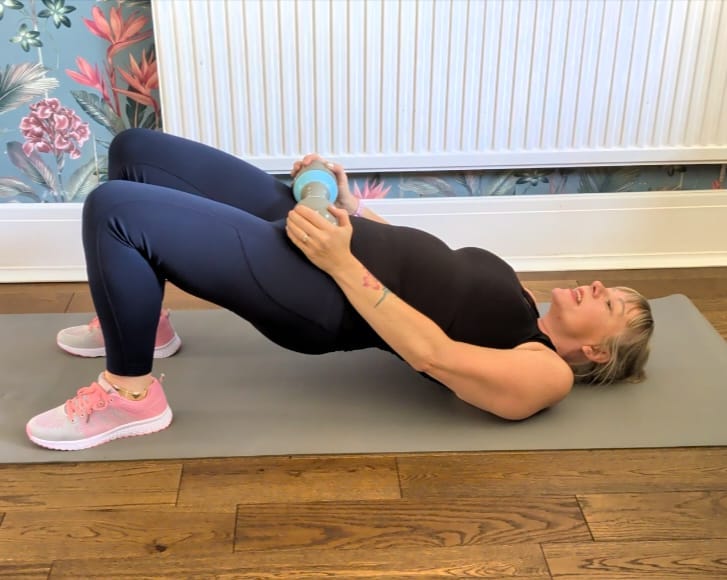
Make the rest of your time active
DO NOT come home from work and simply sit down again. Spend some time moving. Unless of course you want a lifelong low back pain problem to develop.
Do the above exercises. Go for a walk, go for a short run, do some cleaning, get some cooking done. Do some structured strength training.
If there’s something you want to watch on TV - either do it standing up, or sit on the floor instead of the sofa.
Dr Kelly Starrett, a very well respected physical therapist, advises we should sit on the floor for 20-30 minutes daily. It combats the rigid postures of being substantially chair-bound.
Keeping the movement patterns flexible and flowing during the working day will help immensely. However, if you have developed a lot of tissue creep and imbalances due to sitting for many years, then consider starting a back strengthening programme.
What happened to me?
Did I become a changed character and start doing all this type of exercise during my working day? Nope. I knew none of this back then.
As it turned out, the shift in the media world as print journalism moved online meant I had to adapt and reevaluate my career. It moved in new directions and I wasn’t sitting anywhere near as much as I used to.
I also got into fitness, and a more ‘on the go’ working life combined with the aerobic activity took away my back pain and RSI problems.
But now, since I have returned a little more to desk work, I do of course practise all that I preach.
Once I completed my Level 4 Low Back Pain Management Through Exercise qualification, I also now offer back care programmes for organisations, to help their workplace teams.
I would love to know if this advice has helped you. Please comment if it has?
Before you go:
Whether you are an individual or an organisation, if health and wellness is important to you, then please subscribe here for free. Expect a weekly, informative article along my themes of strong backs, strong bones, strong muscles - and follow me for notes with useful daily tips.
Disclaimer:
This content is for educational purposes and isn’t a substitute for medical advice. Please check with your doctor before trying new exercises or taking health advice on this page; especially if you have osteoporosis, a diagnosed condition, or any concerns about your health.
So good! It's not even a matter of desk jobs anymore. We have all become so sedentary.
Thanks so much for this. I'm turning 70 in a few months and am getting really committed to my fitness routine for the first time in my life. I'll look forward to future posts. One ergonomic tip that really helped me - years ago I was having much pain from carpal tunnel syndrome and was on the verge of asking my doctor about surgery. I switched to a vertical mouse instead. Presto! The pain went away in about a week. .Our bodies were just not built for the unnatural hand and arm position required to use a regular mouse. The handshake approach to a vertical mouse is much more natural.