


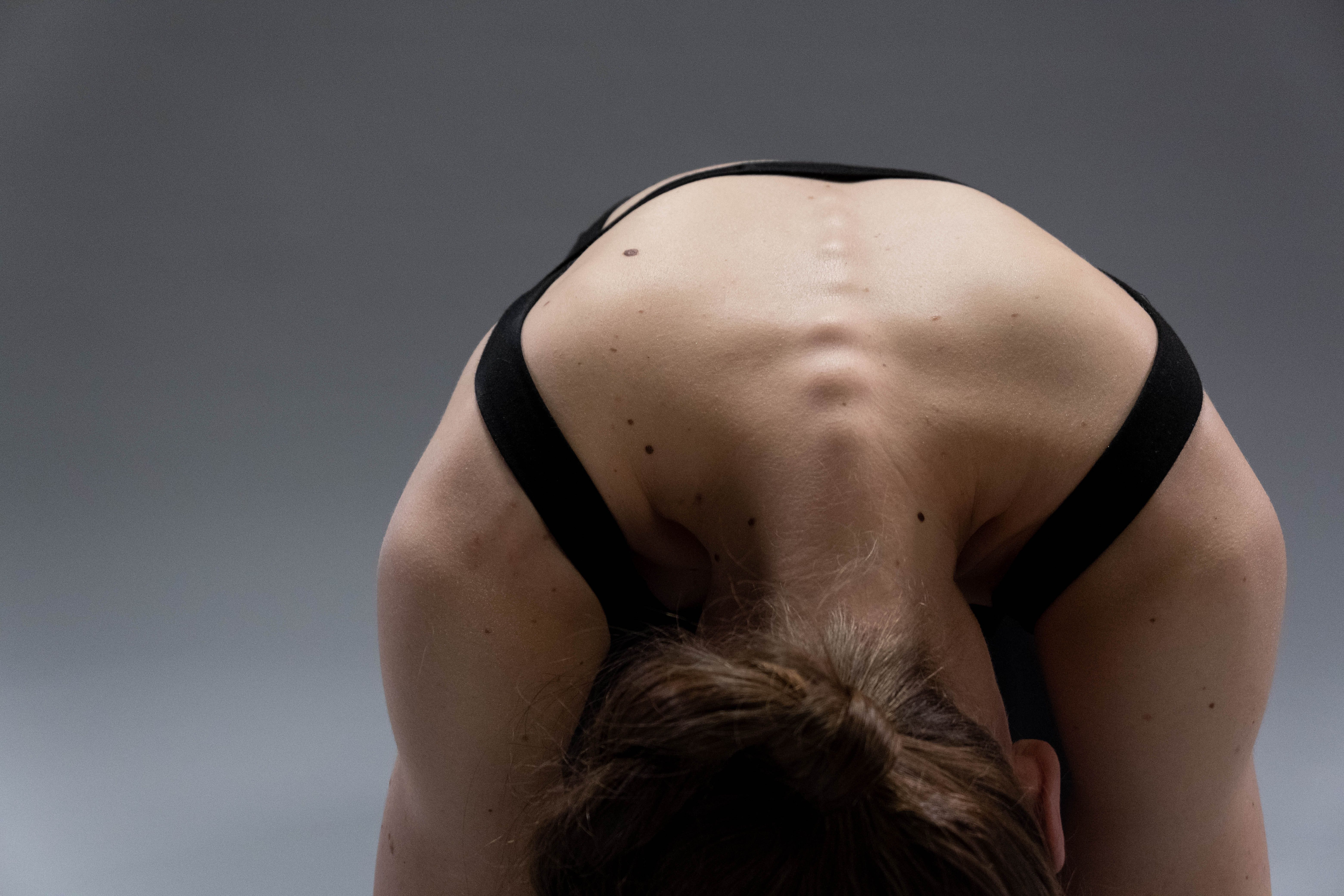
This is Part 2 of The Myths That Are Working Against You. Last week, I looked at the fear of getting bulky in relation to women’s training, and how that myth has a cost. This week, it’s about a habit that is viewed as a commonplace solution for an achy back: stretching.
You wake up in the morning with a stiff back. What’s your first thought? Do some stretching? Perhaps the knees-to-chest stretch? Or lean over and touch your toes?
But here’s something you may not have expected. In a 1998 trial, people with chronic low back pain who simply avoided bending their spine forward in the first hour or so after waking reduced their pain days by 23%. A comparison group given a dummy routine improved by just 2%.
Three years later, those who had kept it up had cut their pain days by around half again. There is a nuance to this. Overnight, the spinal discs soak up fluid, which makes them stiffer and less able to cope with bending first thing (Adams et al., 1987).
But the point remains: for many people, the first response to an achy low back is a few morning stretches, especially touching their toes.
Before I put any backs up (excuse the pun), I want to make clear that I am not against stretching as a form of movement that can offer both benefit and enjoyment.
What I want to demonstrate is that passive stretching alone is rarely a solution to low back pain.
To stretch or strengthen, that is the question…
It’s not that simple. The bigger picture is that exercise does help low back pain, but there is no clear winner among the different approaches.
A 2025 umbrella review of 88 systematic reviews (Viderman et al., 2025) found that strengthening was the most studied type of exercise for low back pain. Meanwhile, a large 2021 network meta-analysis (Hayden et al., 2021) found that stretching was the only type of exercise that didn’t reduce pain more than minimal treatment. (Interestingly, flexibility exercises did help people’s day-to-day function.)
Yet stretching is what most people reach for first. So there is a disparity: the go-to approach is the one least likely to make a difference to pain.
In my experience as a personal trainer, qualified to help people manage low back pain through exercise, several people have told me that stretching was their main way of dealing with back pain.
Lo and behold, they weren’t getting anywhere with it. But once they started doing targeted core and strengthening work under my guidance, their back pain finally began improving.
The extensive work of Professor Stuart McGill, one of the world’s leading low back pain experts, who ran a spine biomechanics lab for decades, argues that people should focus on building trunk stability first (e.g. McGill & Karpowicz, 2009).
As I covered in my article on prolonged sitting and low back pain, one common factor behind the pain is that, for whatever reason, the supporting tissues have weakened.
Stretching on its own is therefore unlikely to resolve the pain. Much of the work has to come from making those supporting tissues strong again.
Why Prolonged Sitting is a Pain in The Back (and What You Can Do About It)

How many hours do you sit at a desk during your working day? Does your butt stay glued to the chair more than your feet ever get to tread the carpet? Or do you incorporate movement into your seated day?
Yes, but stretching feels good at the time?
Stretching can often provide temporary relief. This is a big reason why people struggle to realise that they may not be dealing with the underlying problem, and in some cases may even be making it worse.
It also feels safe and gentle, and when a sore back is causing tension and “tightness”, it seems like the right response.
People go to general classes where instructors may say, “Oh, some stretching might help your back,” or they hear from Auntie Edith down the street that her sciatica was “cured” with some stretching.
Many people, including non-specialist instructors, don’t always understand the mechanisms behind low back pain, either for an individual or more broadly.
The “tightness” that people often feel doesn’t always mean that a muscle has shortened (though of course, this can also be true). It can also be a protective response from the body, known as “muscle guarding” (e.g. Williams et al., 2024).
What sort of movement counts, then?
It is not simply that “strengthening wins”. And we need to define what we mean by “strengthening” in this context, because I’m not referring to a deconditioned person squatting 80kg with a barbell. Absolutely not.
I’m talking about functional movement that might be done along with core and conditioning exercises. Movements that build trunk stability, hip strength and mobility, as well as the posterior chain (lower back, glutes, back of legs).
For example, the exercises known as McGill’s “Big Three” (McGill & Karpowicz, 2009), the modified curl-up, bird dog and side bridge, could be taken as a safe, sensible starting point for core stability.
I teach them myself in my back care classes, but alongside other exercises that help to support the back and core. While the Big Three are a good base to work from, an early review that has not yet been peer reviewed (Laurin et al., 2022) says there is limited evidence for their effectiveness when used on their own.
For an overall programme to improve low back pain effectively, it’s best to include variety. This might be drawn from different sources, such as Pilates, yoga, resistance training, the McKenzie method and other specific, functional training.
These approaches generally overlap in the types of movement patterns they use. In my back care instruction, many of the exercises I teach look similar to ones you might find in Pilates, functional classes, and even yoga.
Having said this, it’s worth highlighting that structure, consistency and intention are what count. Sherman et al. (2011) found that 12 weeks of weekly 75-minute classes of either yoga or structured stretching both reduced pain and improved function more than a self-care book, with benefits lasting at least six months.
Another trial found that stretching performed just as well as motor control (stability) exercise for chronic non-specific low back pain over 26 weeks (Turci et al., 2023). However, the stretching in this study followed a branded programme called Global Active Stretching. It was supervised weekly by a physiotherapist, with six structured postures performed each session. The method requires you to you hold posture by working the opposite muscles, so it’s more active than most stretching.
The difference is that these stretching programmes were structured and progressive. People weren’t randomly doing cat-cow and downward dog a few mornings a week and hoping for the best.
The key is that the movement is targeted and purposeful.
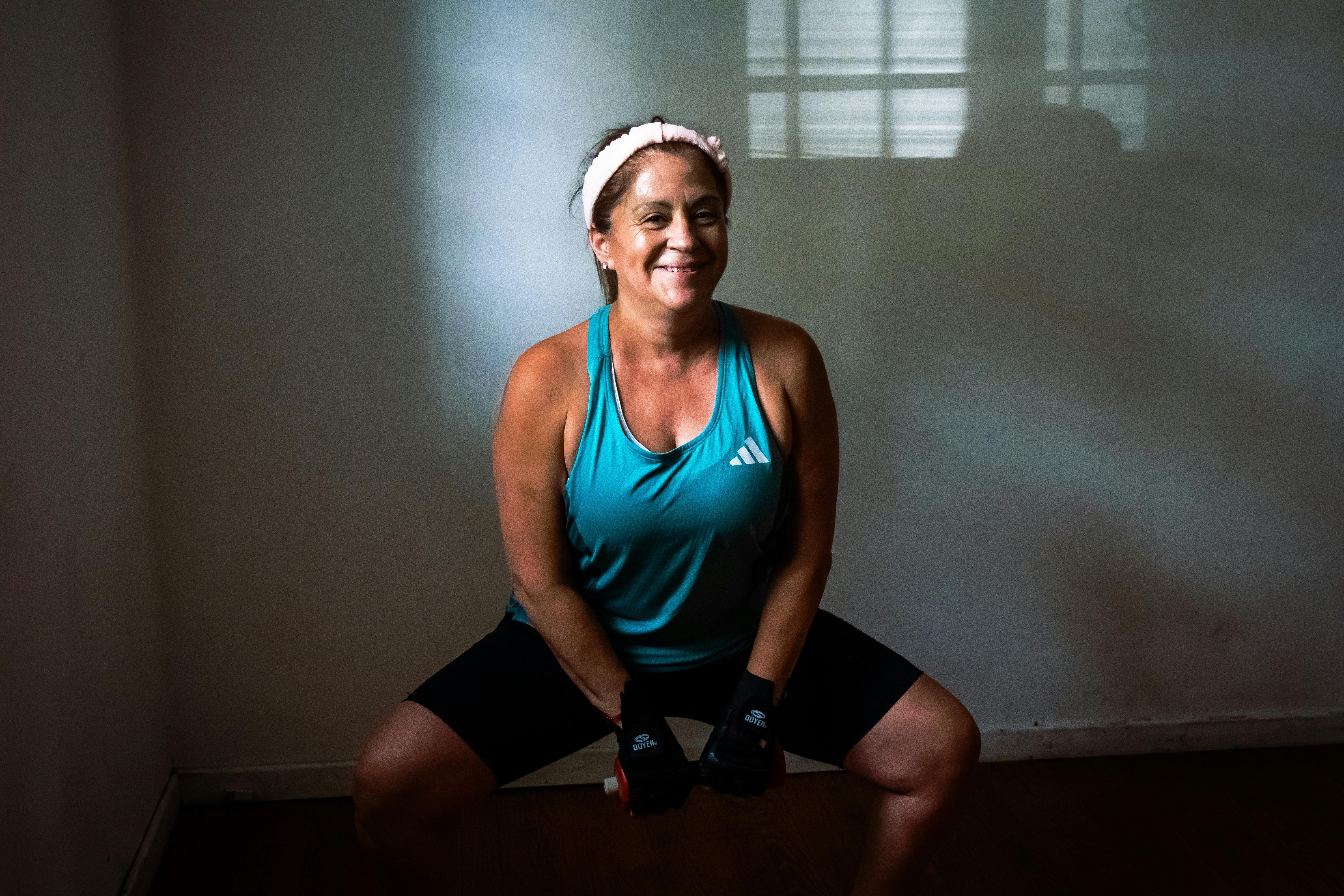
Midlife movement needs to do several things
Mostly, as we can see, the evidence says that passive stretching, done as a stand-alone fix, tends to underperform.
However, stretching combined with strengthening, or used for mobility rather than as the whole treatment, can make a difference.
Chronic low back pain can strike at any age, but as we reach midlife, when we are weathering physical wear and tear and/or hormonal changes, it may well rear its ugly head.
This is especially so if we have spent many years either being inactive, or not being active in the right ways. Our bodies can tolerate a lot, but eventually they cry for help.
We need to do more for our bodies in midlife, compared to when we were younger and could get away with less. This means making sure that the time spent in any kind of intentional movement is as effective as possible, and covers several bases.
Where strengthening exercise wins over stretching is that some of it, resistance training especially, is also bone loading, and helps to maintain or even build bone. Exercise like core conditioning, yoga and Pilates does a huge amount for the stabilising muscles, which help with balance and falls prevention.
Stretching does none of this. So if you only have 30 minutes twice a week to spend on exercise that can help your back pain, why not make it exercise that also ticks several other boxes to make you fitter in midlife?
One important point, though. Where stretching absolutely has a place in midlife movement is in the cool-down. Some exercise physiologists, such as Dr Stacy Sims, say that stretching to finish a session becomes more important as we get older (Sims, 2022). You could also include some foam rolling, if you find it helps.
The crux of it
If all this talk about stretching and strengthening has baffled you, let me summarise. In tackling chronic non-specific low back pain through exercise, here are the bullet points:
Some movement is almost always better than none, with one exception: forward-bending stretches in the first hour after waking may make things worse.
Of the exercise approaches studied, stretching on its own is the weakest performer for pain, yet it’s often the first thing people try.
Structured, intentional, programmed stretching has been shown in a small number of studies to reduce low back pain about as much as stability exercises.
Stretching does not offer additional benefits of other approaches though, like bone loading or stability training, important in midlife.
And to add a little more of my experience as a personal trainer and low back pain coach, what I have found with the people I teach is that their symptoms start to improve when they adopt a rounded approach.
In my back care class, they do core and conditioning types of exercise along with some light bodyweight training. A lot of the movements we do look similar to those you may see in Pilates or conditioning programmes. I always encourage them to do more walking (an excellent activity for backs!), and if they can, to follow a strength training programme.
It’s not rocket science, but the people who have a mix of activities fare better than those who don’t, especially those who had only tried stretching before.
Want a little routine to help with low back pain? Try these.
Remember, it’s doing them consistently over time that will help. They are not an instant quick fix.
Do these any time except the first hour after you get up. Aim for two or three times a week.
Safety first: Some mild effort is fine, but if your pain increases, spreads down a leg, or stays worse the next day, stop and get it checked. See your doctor first if you have numbness, changes in bladder or bowel control, or pain after a fall.
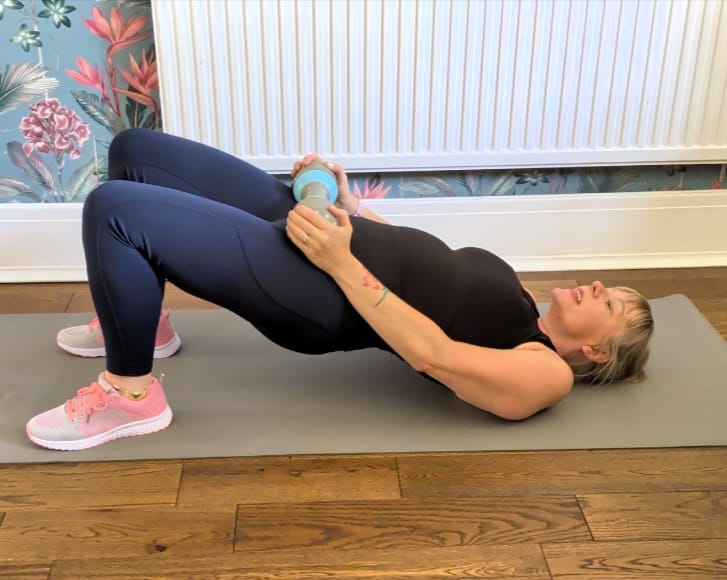
Glute bridge
Lie on your back, knees bent, heels close to your bum and feet hip-width apart. Squeeze your bum and lift your hips until your body forms a straight line from knees to shoulders, without arching your lower back. Keep squeezing the glutes while you hold at the top for 2 to 4 seconds, then relax and lower. 10 reps, 2 sets.
If this is easy for you, add some load by resting a weight across your hips as you move into the bridge.
Why it helps: It strengthens the glutes, which help support your lower back. Weaker glutes are commonly linked with low back pain.
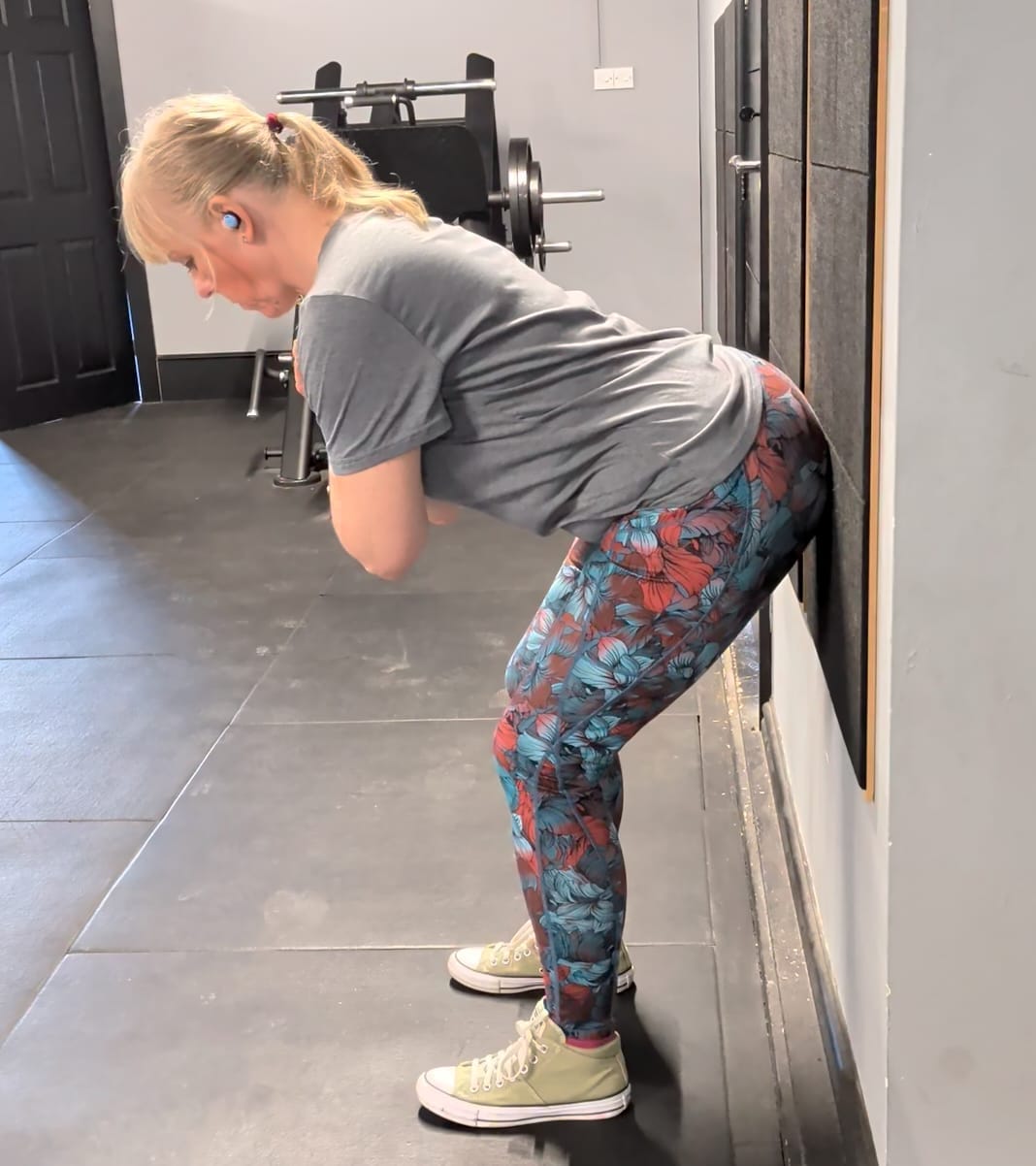
Wall hinge
Stand with your back to a wall, a few inches away, feet hip-width apart and a soft bend in the knees. Cross your arms at your chest and hinge forward from the hips, keeping your back flat, until you feel your glutes lightly tap the wall behind you. Squeeze your glutes to return to standing. 10 reps, 2 sets.
If this is easy for you, try a bodyweight “good morning” instead, doing the hinge away from the wall with your hands lightly behind your head.
Why it helps: It teaches your hips to take the load of your body, so that your back doesn’t have to. It also teaches your hips and pelvis to move while your back stays steady.
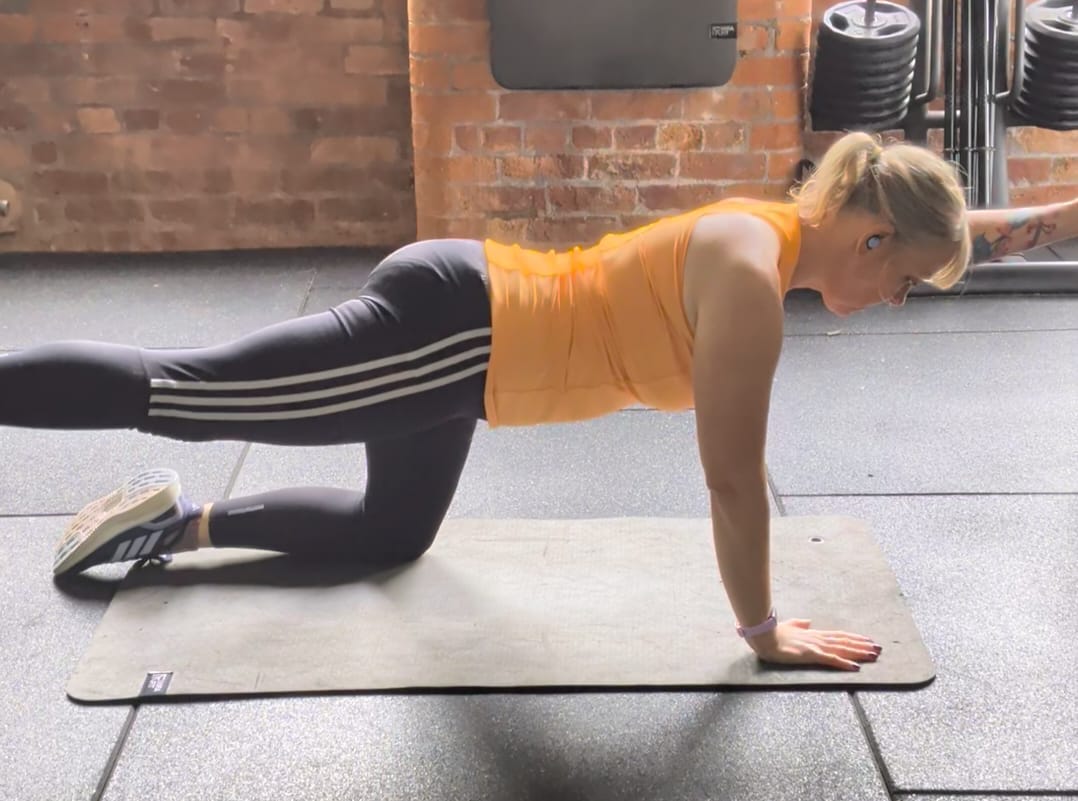
Bird dog
Start on your hands and knees on a mat, in a “table top” position with a flat back. Raise one arm while raising the opposite leg (e.g. right arm, left leg). Keep both limbs straight and don’t let them go higher than your back. Keep your hips level; don’t let them tip or twist. Briefly hold, then swap sides. 6 each side, 2 sets.
If this is easy for you, hold each one for longer, up to 10 seconds, or do extra reps.
Why it helps: It builds deep core stability while keeping the load on your lower back low.
To finish as a cool-down: knees-to-chest stretch (optional)
Lie on your back and gently draw one knee, then both, towards your chest, holding behind the thighs. Breathe slowly and hold for 20 to 30 seconds, then release. Keep this one for later in the day, not first thing.
Why it helps: It’s a gentle way to wind down after the work is done. It’s a cool-down, not the main event.
Next in the series: Part 3, on why ‘thin’ doesn't necessarily mean healthy, especially for bones.
Want to become unbreakable?
Exciting news!
Coming in early 2027 is my 8 week course, Become Unbreakable: Future-proofing Your Body for Women After 40. No obligation to be on the course by joining the early bird waitlist, but if you decide it’s for you when the time comes, you’ll be eligible for my early bird offers and bonuses!
References
Snook SH, Webster BS, McGorry RW, Fogleman MT, McCann KB. The reduction of chronic nonspecific low back pain through the control of early morning lumbar flexion: a randomized controlled trial. Spine. 1998;23(23):2601-2607.
Snook SH, Webster BS, McGorry RW. The reduction of chronic, nonspecific low back pain through the control of early morning lumbar flexion: 3-year follow-up. Journal of Occupational Rehabilitation. 2002;12(1):13-19. doi:10.1023/A:1013542119063
Adams MA, Dolan P, Hutton WC. Diurnal variations in the stresses on the lumbar spine. Spine. 1987;12(2):130-137.
Viderman D, Kalikanov S, Myrkhiyeva Z, Alisherov S, Dossov M, Seitenov S, Abdildin Y. Impact of exercise therapy on outcomes in patients with low back pain: an umbrella review of systematic reviews. Journal of Clinical Medicine. 2025;14(17):5942. doi:10.3390/jcm14175942
Hayden JA, Ellis J, Ogilvie R, Stewart SA, Bagg MK, Stanojevic S, Yamato TP, Saragiotto BT. Some types of exercise are more effective than others in people with chronic low back pain: a network meta-analysis. Journal of Physiotherapy. 2021;67(4):252-262. doi:10.1016/j.jphys.2021.09.004
McGill SM, Karpowicz A. Exercises for spine stabilization: motion/motor patterns, stability progressions, and clinical technique. Archives of Physical Medicine and Rehabilitation. 2009;90(1):118-126. doi:10.1016/j.apmr.2008.06.026
Williams et al. (2024). [Add full reference]
Laurin E, Minerbi A, Besemann M, Courchesne I, Gupta G. The McGill approach to core stabilization in the treatment of chronic low back pain: a review. medRxiv (preprint). 2022. doi:10.1101/2022.01.21.22269311
Sherman KJ, Cherkin DC, Wellman RD, Cook AJ, Hawkes RJ, Delaney K, Deyo RA. A randomized trial comparing yoga, stretching, and a self-care book for chronic low back pain. Archives of Internal Medicine. 2011;171(22):2019-2026. doi:10.1001/archinternmed.2011.524
Turci AM, Nogueira CG, Carrer HCN, Chaves TC. Self-administered stretching exercises are as effective as motor control exercises for people with chronic non-specific low back pain: a randomised trial. Journal of Physiotherapy. 2023;69(2):93-99. doi:10.1016/j.jphys.2023.02.016
Sims ST, Yeager S. Next Level: Your Guide to Kicking Ass, Feeling Great, and Crushing Goals Through Menopause and Beyond. New York: Rodale Books; 2022. ISBN 9780593233153.
Disclaimer:
This content is for educational purposes and isn’t a substitute for medical advice. I am not a clinician. Please check with your doctor before trying new exercises or taking health advice on this page; especially if you have osteoporosis, a diagnosed condition, or any concerns about your health.
A great reminder that feeling better isn’t always about doing more of what feels good in the moment, but understanding what our bodies truly need. Consistent, purposeful movement makes all the difference.