


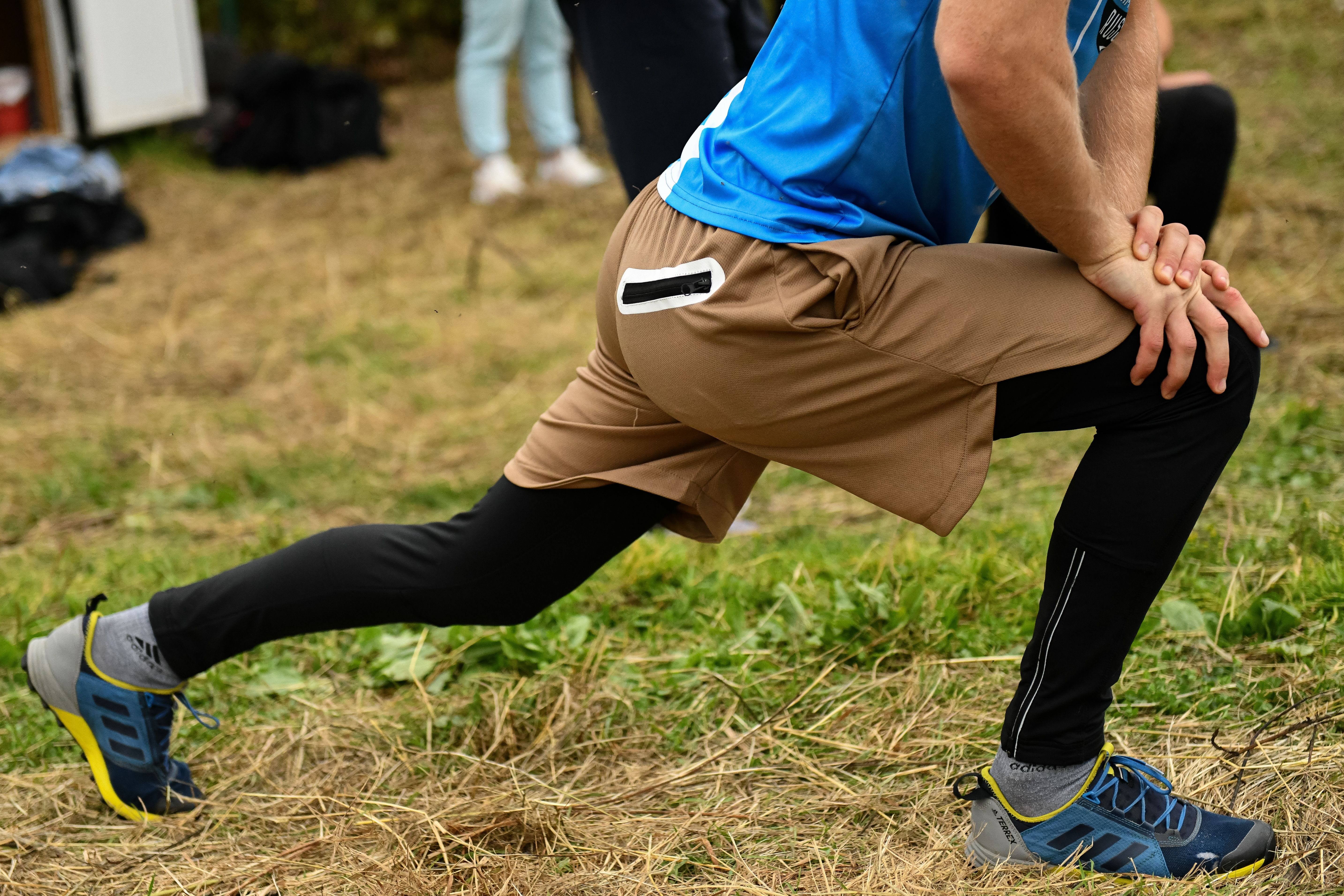
Most of us have a particular body part that may twinge when we exercise, or after we finish. When that happens, you know you didn’t warm up properly.
For me, it’s my outside left thigh. Without going too techy, it’s the vastus lateralis muscle, the outer part of the quads, which sits directly under the IT band.
I soon realise when my warm-up hasn’t done the trick. I certainly know if I skipped it altogether.
My squats become impossible as the pain in my thigh gets sharper with each one. Sometimes, the strain can hurt for days, which stops me doing further deep leg work over several sessions.
I mean, it’s easy to do. When you’re short on time, or just have a low boredom threshold (like me), skipping the warm-up feels like something you can get away with. Until you can’t.
And for midlifers and older, the warm-up actually becomes an essential part of the routine. I’ll explain later why this is so.
My right hamstring is another body part that can go ‘ping’ if I don’t warm up well. To the point now that I’m often more in a rehab drill with my hamstrings rather than doing the work I want to do.
So, take heed. Do as I say, not as I do.
Though sometimes, pain may be an over-use or over-training issue rather than a warm-up issue, and if you’re unsure, it’s worth getting it checked.
What does a warm-up actually do?
Before we exercise, we need to prepare the muscles and body for action. A warm-up helps raise the body temperature and heart rate, and that increased warmth and blood flow makes the muscles more flexible and pliable.
You’ll often hear the term to “activate” the muscles from trainers. And the same movements will also be helping the joints, by circulating the synovial fluid that keeps them lubricated.
A key purpose of warm-up is to help reduce injury risk. One review of footballers found that a structured 20-minute warm-up before play could reduce injury risk by around 39% (Thorborg et al, 2017). That’s quite a significant figure!
It also helps with the mind-body connection, too. Have you ever felt that your first set of an exercise can feel hard, and not quite ‘together’, but the second set is often much easier and more coordinated? My clients used to report this to me all the time.
It’s not just that the body has warmed up, but the brain also knows what it’s doing by the next set.
Because of the improved neuromuscular connection as well as the more flexible muscles and lubricated joints, range of motion is often increased, too. This improves performance during the ‘main act’: the training session.
Why is a warm-up more important in midlife?
We’ve all felt it. That little bit of ankle stiffness that never used to be there. Those low back niggles that seemed to appear overnight. The aching hips that haunt you through the night after a hard squat session.
Middle age and menopause bring with them a host of new considerations. Don’t you just know it?
A review which looked at musculoskeletal symptoms as women transition between perimenopause and menopause said that more than 70% of women will experience them, and for 25%, they will be significant (Wright et al, 2024).
As oestrogen declines, we lose elasticity in our tendons, muscles, and ligaments. They can become stiffer and slower to recover, making women more prone to strains and injuries.
Movements we used to breeze through might impact us differently now. For example, gluteal tendinopathy, which often shows up as hip pain at night, becomes much more common during this phase of life, and deep squats can sometimes aggravate it.
There are more examples but we would be here all day. Suffice to know that changing bodies have changing requirements in training.
And this includes men, too. With age can come more aches and niggles across joints and soft tissue, as well as slower recovery. Of course, it’s not a reason to stop, but just a reason to spend more time on warm-up.
As we age, our heart, lungs and muscles also take a little longer to get up to speed at the start of exercise. A gradual warm-up gives them time to catch up, rather than asking them to go from nothing to full effort straight away.
So. Here you have it. Hopefully I have convinced you to take more time on this in future.
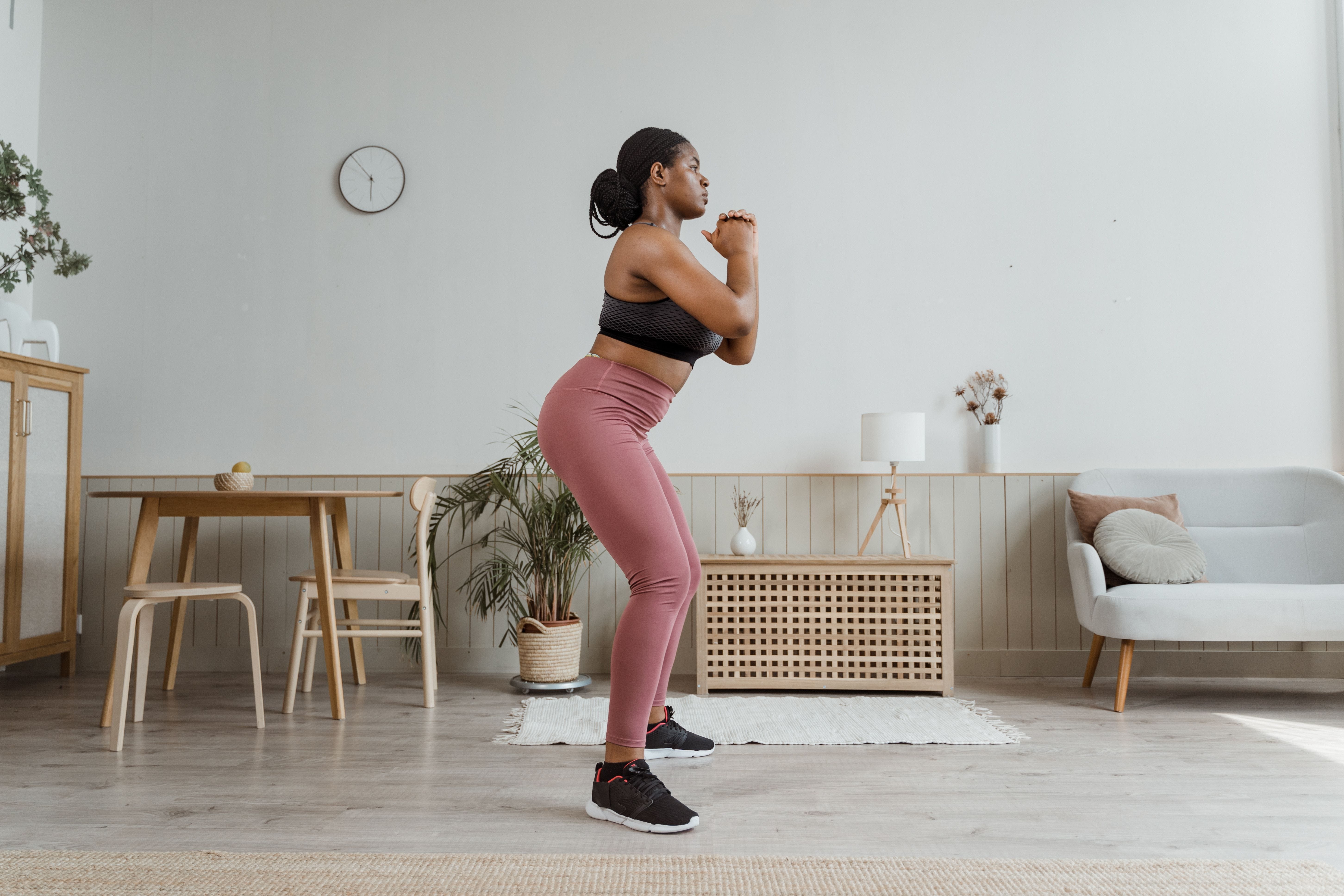
How to warm up properly
Firstly, your warm-up needs to be appropriate to what you are doing in your session, whether it’s strength or cardio.
For example, if you are going for a run, then you will want to warm up the legs, hips and ankles, as well as increase your heart rate before you run.
If you are doing strength training and you’re on an upper body day, then you will want to mobilise and warm up the shoulders, neck, arms and back.
My strength training is pretty much always total body, I never do just legs or just upper body, so my warm-ups need to cover a few bases.
Your pre-workout movements need to reflect the movement patterns of your main workout. So you know you’re doing floor push-ups? Then some light wall presses will come in handy.
You’re going to be doing barbell back squats? Then try some deep goblet squats as a warm-up, pausing at the bottom of the squat for a few seconds.
Be aware though, the standard advice of long held static stretches pre-exercise is fairly outdated now. We now know they don’t prevent injury (Thacker et al, 2004), and holding a stretch for more than a minute can even sap your strength and power (Chaabene et al, 2019).
A warm-up that helps you move through the exercises you’re about to do is the better choice. Save the long stretches for your cool-down.
My takeaway tips to warm up better and improve your training:
Bearing in mind that your warm-up will look different depending on what you’re doing, and there are infinite possibilities for training, I can’t be specific about which warm-up routines are right for you. But following the advice below will help you go far:
Make your warm-up non-negotiable. It’s not an optional extra, but an essential part of your training session.
Plan your warm-up activities according to what your session will look like. Doing single leg work? Make sure the ankles and legs get some prior movement. Glute work? Try some light step-ups before the main action.
Midlifers need to spend more time on warming up. Take 10-15 minutes instead of five. Your body will thank you, I promise.
Make your warm-up dynamic, not static. It shouldn’t be heavy, but flowing movement patterns rather than holding static stretches.
You’ve spent the time warming up, remember to cool down later when your main session is over! Also important, but let’s save that for another article.
What’s your warm-up story? Please do share in the comments. I’d love to know.
Want to become unbreakable?
Exciting news!
Coming in early 2027 is my 8 week course, Become Unbreakable: Future-proofing Your Body for Women After 40. No obligation to be on the course by joining the early bird waitlist, but if you decide it’s for you when the time comes, you’ll be eligible for my early bird offers and bonuses!
Disclaimer:
This content is for educational purposes and isn’t a substitute for medical advice. I am not a clinician. Please check with your doctor before trying new exercises or taking health advice on this page; especially if you have osteoporosis, a diagnosed condition, or any concerns about your health.
I have to admit, I’m quite naughty and don’t warm up as much as I should. This is a great reminder that I should make a proper warm-up a non-negotiable part of my routine.
So important, thank you for this! I am always in a hurry and thinking cutting my warm up in favour of a longer strength training session is a good idea. Spoiler Alert: it isn't. My most important area to warm up are my shoulders and upper back - I suffer for days after if I don't do it. Maybe I will learn some day....