

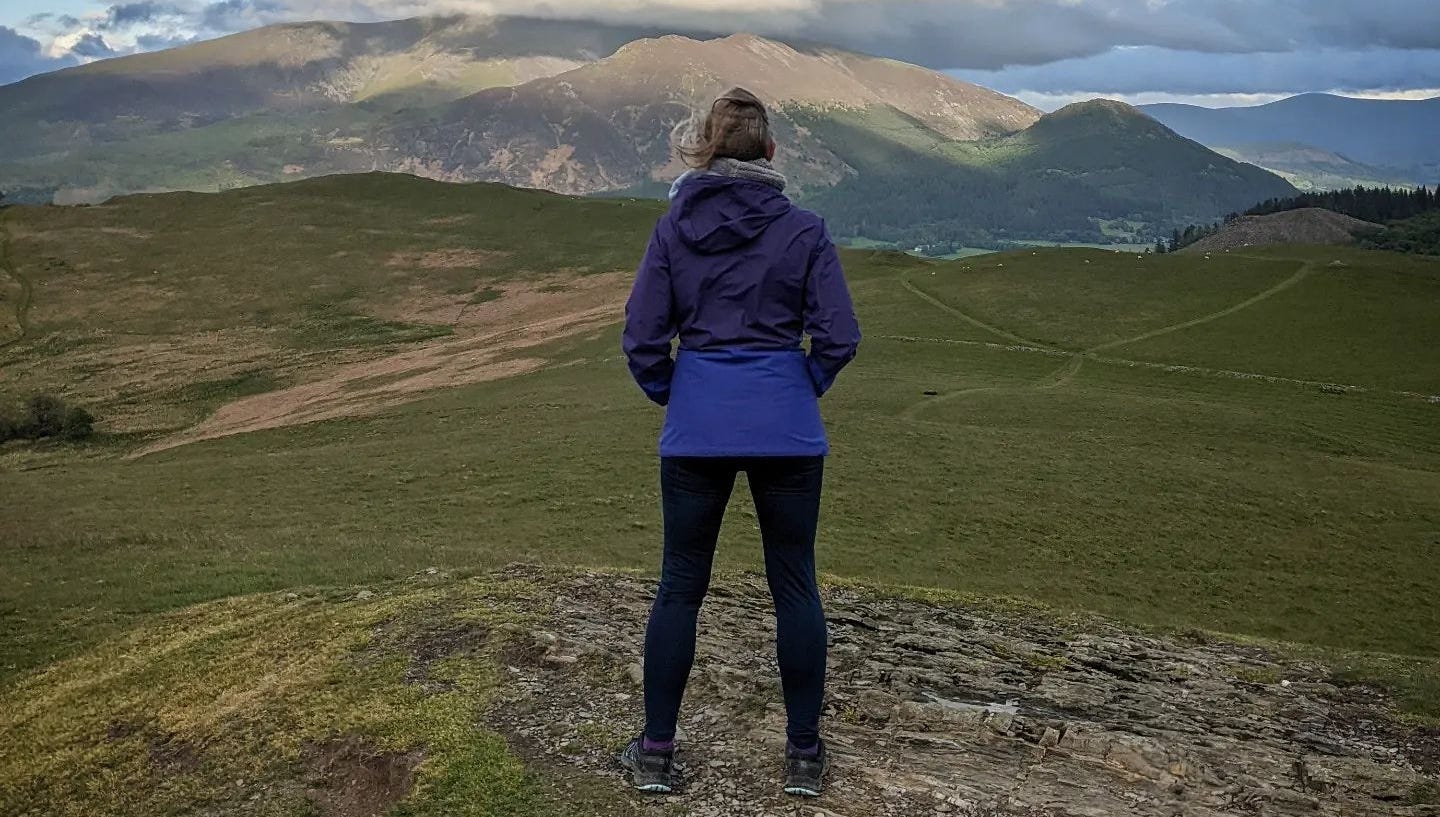
I don’t know about you, but I’m obsessed with my Fitbit. If I’m out walking and realise it’s not on (extremely rare, my husband thinks it’s surgically attached), I feel tormented.
Of course, my steps will still count, Fitbit or no Fitbit, but I won’t know how many I’ve done. My weekly tally will be out of sync. CRY.
I aim to do at least 10,000 steps every day. My average over the week is around 11,500 per day, unless I’ve done a mega hike or been on a city break, traipsing everywhere.
Because I’ve had dogs most of my life, walking has always been a feature of my day. But I love it, too. I’d do it without a dog.
I wanted to be a walking guide at one time. I did my Hill and Moorland Leader training. Then covid hit and I never got around to the assessment.
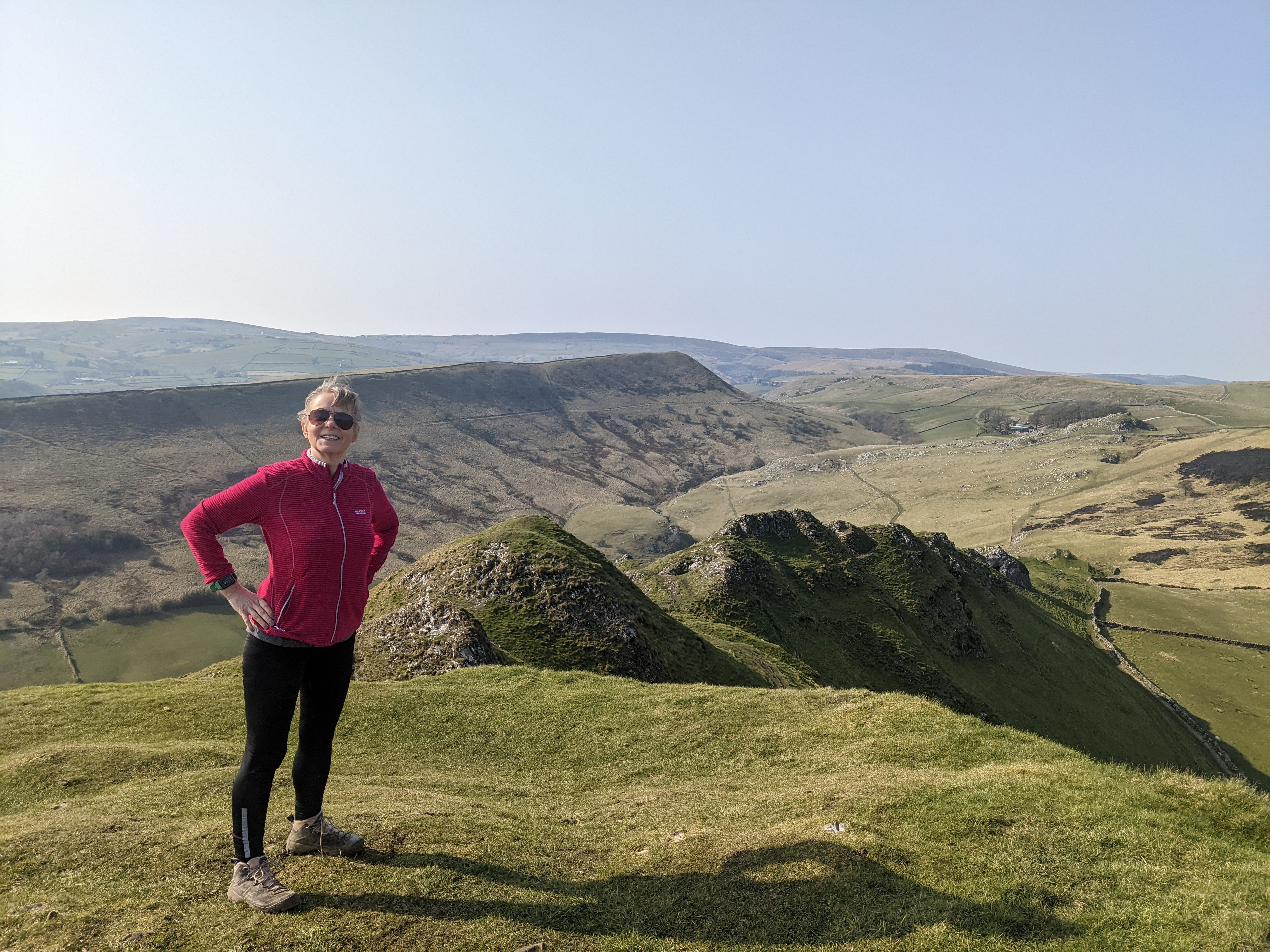
I substantially built up my walking stamina over the years. Living close to the UK’s Peak District, I have the benefit of incredible rolling hills and moorland paths to hike.
In July 2021, I went to Scotland and climbed Ben Nevis with ease, even on what turned out to be one of the hottest days of the year for Scotland!
I was also super ‘cardio fit’ around this time. You may have read that I used to hammer the cardio.
5 Years of Doing Cardio “Right” and I Still Got It Wrong

Are you a gym bunny, doing classes every week? Or out in the countryside, cycling every weekend? Or in the fast lane at the pool, splashing everyone with your front crawl? Doing all this and telling yourself it's protecting your bones?
Zumba, STEP, spin and swimming were all a regular feature of my week, rounded off by a 16km hike in the countryside.
Despite all this activity, I still ended up being diagnosed with osteopenia in September 2022. So, if anyone tells you that walking is ‘enough’ for bones, don’t believe it.
Walking: what is it good for?
Without a doubt, walking provides a massive number of benefits. But what about the famous 10,000 steps? A 2004 review traced that number back to Japanese walking clubs and a business slogan, not to research (Tudor-Locke and Bassett, 2004).
So, it’s kind of a made up figure. And do you need to get in exactly 10,000 steps per day to achieve those benefits? Nope.
Benefits start kicking in at surprisingly low numbers. In a study of older women (average age 72), around 4,400 steps a day was linked with a 41% lower death rate than about 2,700 steps. That’s pretty staggering, for such a small amount of extra walking.
Around 7,500 steps, it seems those benefits start plateauing (Lee, 2019). The plateau shifts with age: a pooled analysis of 15 studies found risk kept falling until around 6,000 to 8,000 steps for over-60s, and 8,000 to 10,000 for younger adults (Paluch, 2022).
However, there is still good reason to aim for a little bit higher.
A large observational study in dementia research showed an association between around 9,800 steps and a 51% lower risk of dementia in UK adults (del Pozo Cruz, 2022). While causation has not been proven, to me, it’s a target worth aiming for.
There is nothing to lose. As well as the possible rewards for brain health, there are links to improved mood and mental health with a greater number of steps. A review of 33 studies links 7,000 steps or more to a 31% lower depression risk (Bizzozero-Peroni, 2024).
It may be the act of getting into the fresh air, being in nature, or the boost of mood-enhancing neurotransmitters that come with movement that is behind the figures. But again, nothing to lose!
But is walking enough?
What we need to fathom is “enough for what”? Enough for general well-being, mood improvement, and helping the body stay agile? Absolutely.
Enough to create strong bones and build muscle? Well, not so much. I am a case in point. Fit enough to hike Ben Nevis, yes. But that was reflecting my muscular endurance (rather than strength), and my cardiovascular fitness. My bones were still thinning beneath it all.
I’m only one case, of course, but the science points the same way. Walking trials have shown no significant effect on the bone density of the spine, and only a borderline effect at the hip (Martyn-St James, 2008).
A review specifically on perimenopausal and postmenopausal women, a group especially at risk of bone loss, found similar. Walking as a stand-alone exercise had no significant effect on bone density at the lumbar spine, the radius, or the whole body. There was a gain at the hip (the femoral neck), but only in trials lasting more than six months, and it wasn’t significant across all the trials (Ma et al, 2013).
Even when it comes to falls prevention and balance, the evidence favours focused balance and functional training. A large Cochrane review found these reduce falls, and that adding strength work probably does too, while the effect of walking programmes on falls is uncertain (Sherrington, 2019).
Anecdotal experience from myself: even as an ardent hiker, previous to me beginning strength training, I managed to twist and sprain my ankle severely on THREE occasions within one year. The third of those led to the suspected foot fracture that led to the DEXA scan that showed me I had osteopenia.
That happened in late summer 2022. It wasn’t long after that, once I received my scan results, that I started strength training. Guess what? I haven’t twisted my ankle since, and I think the balance and stability I’ve built are a big part of why. This is just my personal experience, not proof, but it fits the research.
Having a balanced body is essential for women as we age. Men too, of course, but as women are more at risk of bone fracture, it is paramount that we train for balance as well as strength, to prevent the falls that lead to the breaks.
Where walking stops: The evidence
On its own, walking shows small or uncertain effects on bone and falls in trials. These figures come from trials and reviews, not from the observational step-count studies. Units differ by source, so each row says which it uses.
Where walking stops
Spine bone density, walking only: no significant change in 8 trials (+0.007 g/cm², 95% CI -0.001 to 0.016). Martyn-St James, 2008.
Hip bone density, walking only: a borderline gain in the same review (+0.014 g/cm², 0.000 to 0.028). A later review of 10 trials in perimenopausal and postmenopausal women found no significant gain at the spine (+0.01) or, overall, the hip (+0.01). Ma, 2013.
Best hip result from any exercise: progressive leg-strength training, 1.03% less bone loss (0.24 to 1.82). Howe, Cochrane, 2011 (43 trials, 4,320 postmenopausal women).
Best spine result from any exercise: combination programmes, 3.22% less bone loss (1.80 to 4.64). Howe, Cochrane, 2011.
Falls: exercise lowers the rate of falls by 23% (rate ratio 0.77, 0.71 to 0.83; 59 trials, 12,981 people). The effect of walking programmes is uncertain. Sherrington, Cochrane, 2019.
It’s your move:
Looking back over your last seven days. What did your activity levels look like? Walking covers your heart and mood, so if you have done plenty - yay!
But did you do anything to challenge your bones and muscles, like lifting or carrying something heavy? Or anything to challenge your balance, like standing on one leg? If not, then this is a ‘movement gap’.
While we can’t do a full body training routine here in this article, let’s at least work on ankles. Since they are the first major joint that have to manage an uneven path, give them a warm-up, and build some strength in them.
Get your ankles up to walking speed.
Before you head out, do three things, 30 seconds each side. It takes two minutes.
One-leg stand. Hold on to a wall if you need to. Stand on one foot, eyes ahead, ankle wobbling and correcting.
Heel raises. Rise slowly onto your toes, pause, lower for three counts. Do 10 to 15.
Toe raises. Heels down, lift your toes towards your shins, then lower slowly. Do 10 to 15.
I’m a ‘details girl’, and I like hearing about what others are doing. Please tell me in the comments what steps you currently achieve on average each day? How do you fit them in?
Part 2, next Sunday! Look out for Part 2 in this series next week: we’ll look at walking and your back. It will be about what research says in relation to walking and lower back pain, and how to walk if your back is a bit niggly.
If you’re not subscribed yet, pop your email in below so it lands in your inbox.
Want to become unbreakable?
Exciting news!
Coming in early 2027 is my 8 week course, Become Unbreakable: Future-proofing Your Body for Women After 40. No obligation to be on the course by joining the early bird waitlist, but if you decide it’s for you when the time comes, you’ll be eligible for my early bird offers and bonuses!
Disclaimer:
This content is for educational purposes and isn’t a substitute for medical advice. I am not a clinician. Please check with your doctor before trying new exercises or taking health advice on this page; especially if you have osteoporosis, a diagnosed condition, or any concerns about your health.
References
Bizzozero-Peroni B, Díaz-Goñi V, Jiménez-López E, Rodríguez-Gutiérrez E, Sequí-Domínguez I, et al. Daily step count and depression in adults: a systematic review and meta-analysis. JAMA Netw Open. 2024. doi:10.1001/jamanetworkopen.2024.51208
del Pozo Cruz B, Ahmadi M, Naismith SL, Stamatakis E. Association of daily step count and intensity with incident dementia in 78 430 adults living in the UK. JAMA Neurol. 2022;79(10):1059-1063. doi:10.1001/jamaneurol.2022.2672
Howe TE, Shea B, Dawson LJ, Downie F, Murray A, Ross C, et al. Exercise for preventing and treating osteoporosis in postmenopausal women. Cochrane Database Syst Rev. 2011;(7):CD000333. doi:10.1002/14651858.CD000333.pub2
Lee IM, Shiroma EJ, Kamada M, Bassett DR, Matthews CE, Buring JE. Association of step volume and intensity with all-cause mortality in older women. JAMA Intern Med. 2019;179(8):1105-1112. doi:10.1001/jamainternmed.2019.0899
Ma D, Wu L, He Z. Effects of walking on the preservation of bone mineral density in perimenopausal and postmenopausal women: a systematic review and meta-analysis. Menopause. 2013;20(11):1216-1226. doi:10.1097/GME.0000000000000100
Martyn-St James M, Carroll S. Meta-analysis of walking for preservation of bone mineral density in postmenopausal women. Bone. 2008;43(3):521-531. doi:10.1016/j.bone.2008.05.012
Paluch AE, Bajpai S, Bassett DR, Carnethon MR, Ekelund U, Evenson KR, et al. Daily steps and all-cause mortality: a meta-analysis of 15 international cohorts. Lancet Public Health. 2022;7(3):e219-e228. doi:10.1016/S2468-2667(21)00302-9
Sherrington C, Fairhall NJ, Wallbank GK, Tiedemann A, Michaleff ZA, Howard K, et al. Exercise for preventing falls in older people living in the community. Cochrane Database Syst Rev. 2019;(1):CD012424. doi:10.1002/14651858.CD012424.pub2
Tudor-Locke C, Bassett DR Jr. How many steps/day are enough? Preliminary pedometer indices for public health. Sports Med. 2004;34(1):1-8. doi:10.2165/00007256-200434010-00001
I would be lost with out me watch !! My job is , walking on a petrochemical site so we cant have smart watches …. But I’ve got me trusty £21 (find time ) off Amazon which just counts me steps !!! I do 25.000 to 30.000 a day 🫶💪🫶💪🫶💪
I’m the same! I don’t go anywhere without my Garmin watch 😂
I agree, walking is fantastic, but we also need strength and balance training to keep our bones, muscles, and mobility in good shape as we age.