


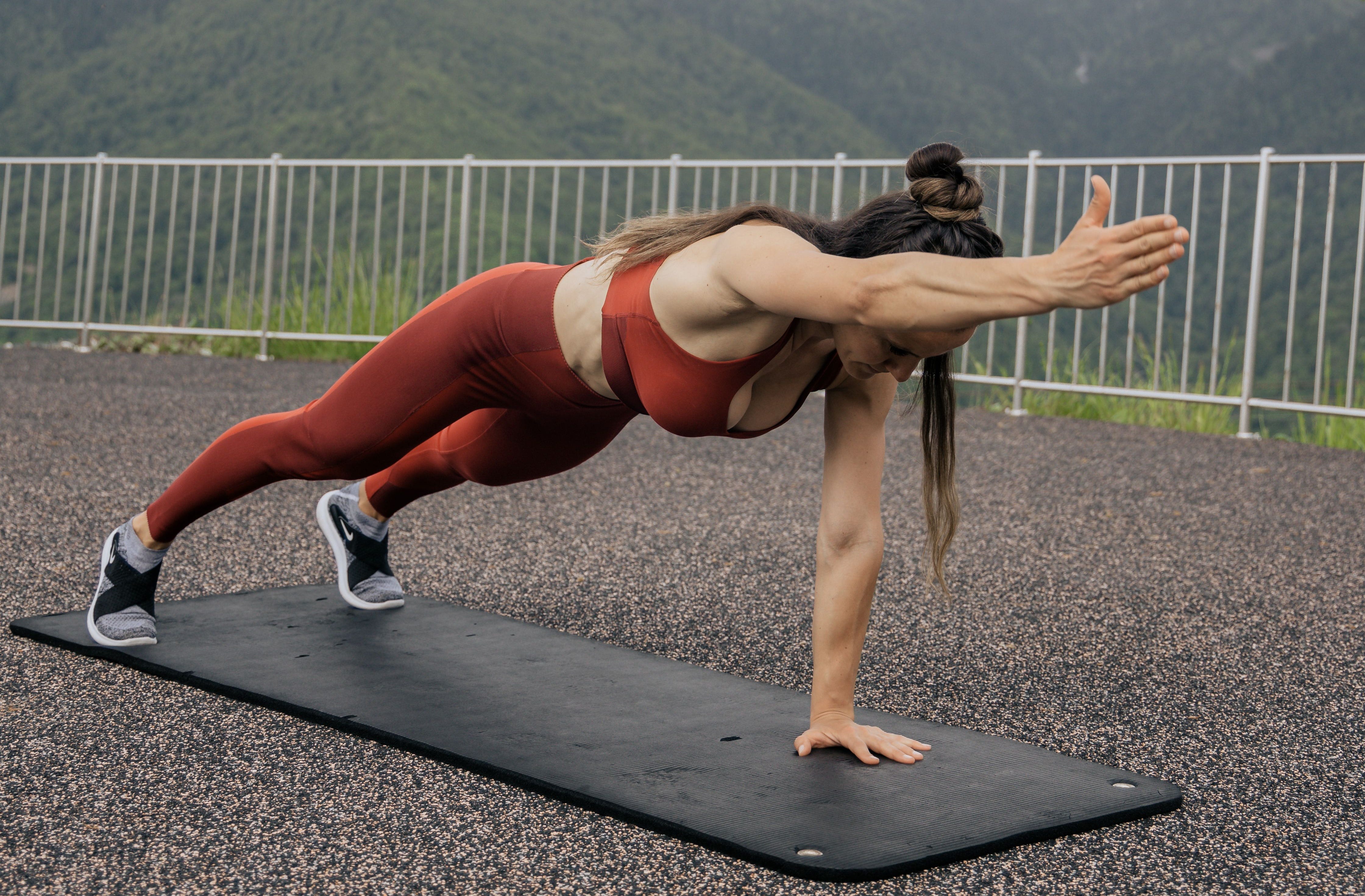
I used to hammer cardio. I remember going to gym classes and would hear instructors vaguely shout “remember to engage your core” before we squatted, and mostly, no actual instruction would follow.
That was the best of it. The worst of it would be when they told you to suck your tummy in. No, no, no. But at the time, I knew no better.
It took me to become a PT before I actually knew what it meant. And to be honest, more from the additional learning I did outside of my qualification to really drill it down. Dr Kelly Starrett is the best teacher on this (his book ‘Becoming A Supple Leopard’ gives a beautiful explanation).
The fact that I never knew how to do it properly all those years was probably one reason why my form was consistently shoddy - especially when it came to squats and the like.
“Engage your core.” “Find a neutral spine.” “Brace before you lift.” They are all great instructions, but meaningless if you don’t know what to do. I’ve even heard people being told “imagine that you’re trying to stop weeing.”
Just. Not. Good. Enough.
My guess is that most of those times being told this or whatever other ineffective cue you were given, it never got explained to you in a way that you could actually apply it.
This is a major bug bear of mine. And I will tell you why.
Being able to properly ‘engage your core’ isn’t just a little bit of icing on the cake. It’s not just about making your workouts a little bit fancier, or showing off at the gym because you know your shizzle.
It is actually crucial in protecting your spine. It is essential to ensuring your form. It is key to making your exercise effective.
Many people can get away with not doing it for years if they are not doing serious exercise, but try to do a deadlift or a loaded back squat without proper core engagement, and you can be looking at a serious injury.
Within my monthly exercise plans which are part of my paid subscription, I want my members doing this when they practise their movements.
But even if you don’t subscribe to my paid membership, I want you to be going out to the gym and approaching your routine in a way which keeps you safe, and also which makes your technique more effective.
What bracing and ‘finding a neutral spine’ mean:
Let’s ditch the jargon and the fancy words. It’s much simpler than it sounds.
While all spines are a little different, and some can be a bit hunched at the top (kyphosis) or curved inward at the bottom (lordosis), most people have a spine that has a natural, slightly curved shape. This is neutral.
‘Bracing’ is tightening the muscles around your trunk, front, back, and sides, so that your body and spine stays supported and stable while you move, rather than collapsing, rounding, or over-arching under load.
Those muscles in those places are effectively your ‘core’, and they compress around your spine to protect it when you ‘engage’ it.
You’re not sucking your tummy in, nor are you holding your breath.
What we are aiming for with this action is to form a tension throughout the ‘core’ that protects your spine while you do something with your body.
This applies whether you are lifting a weight, standing up from a chair, picking up a child, or squatting down to look in a cupboard.
The cue I prefer to use:
Like Dr Kelly Starrett, whose coaching on this has influenced a lot of how I teach it, I ask clients to engage their core in a specific order. It’s done in this order so every step sets up the next, and so clients learn a process that helps them remember.
First, contract your buttocks. Squeeze them properly. The immediate effect of this is to bring your pelvis into alignment under your spine, rather than tilted forward or back, which is the position everything else needs to be built on.
Then, tighten your tummy as if someone were about to punch you in it. Not sucked in. Not held. Braced, hard, the way you’d instinctively tense if you actually expected impact. You are creating functional core tension here.
Then, walk a few paces holding that position. Once you’ve fully mastered core engagement, you don’t need to keep doing the walking bit before exercising or doing a lift - but while you’re learning, it helps to build the habit. I get my back class to do this every week. Bracing while standing still is one thing, but you need to practice the skill of bracing while walking, too. As you become accustomed to holding your body in this way, you will start to use the technique more naturally in everything you do, not just during exercise.
Remember, your spine needs protection in your day-to-day activities like bending, lifting and even walking. Posture when walking can make a difference to feeling low back pain or not.
When I talk about “engaging your core” or “finding a neutral spine” in class, this is exactly what I mean.
[Watch my video: How to engage your core]

Common mistakes I see:
Holding your breath instead of bracing. Holding your breath is not a substitute for finding actual core tension, and is a completely different mechanism. If anything, it adds unnecessary strain and cuts off just as soon as you exhale, right when you might still need the support.
“Sucking in” mistaken for bracing. Pulling your stomach in flat actually weakens your ability to brace properly, since it disengages the muscles that create the all-around pressure that is actually needed. Bracing should feel like your whole midsection has firmed up, more of a tense, than a suck. As I said earlier, imagine someone was going to punch you in the tummy. You want it hard, not sucked in.
Over-arching, or under-bracing entirely. Some people compensate for a weak brace by arching their lower back and flaring their ribs instead, which puts unwanted pressure through the spine rather than protecting it.
Why this matters beyond the gym:
As I have said above, this isn’t just a training cue for when you are in the gym or following my exercise plans.
You need to get into the habit of doing this when you go about your day. For example, before you pick up a shopping bag, lift up a box that the courier left dumped on your doorstep, or are putting the grandkids into the bath.
You can even use it when you have a bad cough - believe it or not, many people with weakened tissues in the back actually put their backs out when they cough! (It happened to me years ago, post child-birth, when everything was still very relaxed).
Practise this during all your training, and it will eventually stop being something you have to think about consciously. It becomes the position your body defaults to under load, which is exactly the protection you want for the decades ahead.
Hope this was useful to you? It’s the article I knew I needed to get up here. Please share far and wide because this is so essential for everyone to understand.
Before you go:
Whether you are an individual or an organisation, if health and wellness is important to you, then please subscribe here for free. Expect a weekly, informative article along my themes of strong backs, strong bones, strong muscles - and follow me for notes with useful daily tips.
Paid subscribers benefit from a new exercise plan every month that is accompanied with videos and includes both beginner options as well as more challenging progressions, free downloads, and depending on your level, check-ins from me or live Q&A!
Disclaimer:
This content is for educational purposes and isn’t a substitute for medical advice. I am not a clinician. Please check with your doctor before trying new exercises or taking health advice on this page; especially if you have osteoporosis, a diagnosed condition, or any concerns about your health.
This teaching draws on the coaching approach of Dr Kelly Starrett.
Thank you so much for sharing this! I have diastasis recti from being pregnant.
This directly went to my Saved posts because this was such a useful reminder on how to properly engage the core. I'm definitely going to use some of your tips the next time I go for a pilates class...instantly subscribed!