

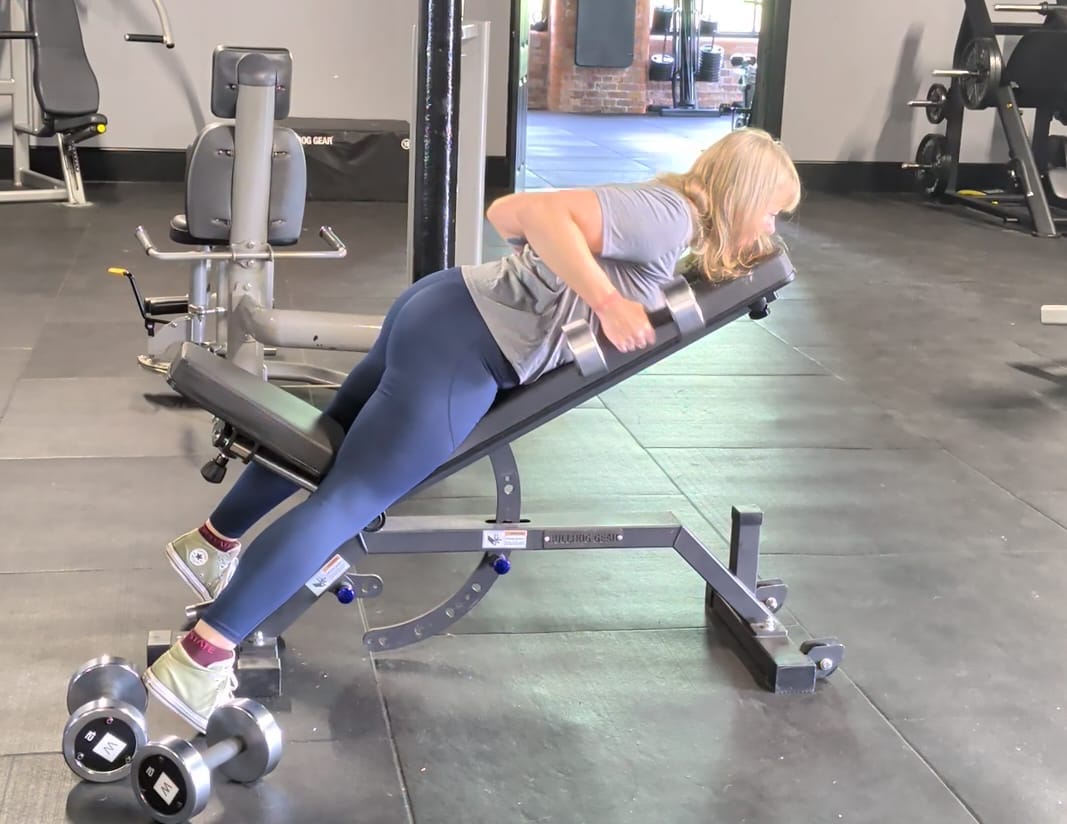
When I first started strength training, most of my workout was on machines: lat pulldown, leg press, hip adductor/abductor, ab curl, cable row, leg extension, and so forth.
Now I use machines far less. I keep a couple of choice ones for specific reasons, but free weights make up the bigger portion of my training. I’ll explain why later.
Worth saying though: my choices are personal, connected to my goals as well as my limitations. Yours should be too. But you need to be informed, so you know exactly why you’re choosing one over the other.
That’s why I wrote this. Beginners especially can be baffled by the array of equipment in a gym, and think a good workout means a few reps on everything without quite understanding why.
Just because machines are there doesn’t mean we have to use them. But this isn’t about saying free weights are always better. As I used to tell my PT clients, “Everything has its place.”
We just have to know where its place is.
Where are you starting from?
This is probably the biggest question to ask yourself. Have you ever picked up a dumbbell? Are you recovering from an injury? Or do you have some experience, but have never planned out what you’re doing, and just fell into a routine without thinking about it?
Working out where you are will help you decide which is more appropriate for what you want to achieve.
Here’s an example. When I first started training, I had a big imbalance between my left and right arms, with my left much weaker. On the chest press machine, I struggled to push from my left side by the last few reps.
I didn’t know it then, but in this situation the answer is to move to free weights. Not a barbell, but dumbbells. Why? When the weight is loaded evenly, as on a machine or a barbell, the stronger arm will start taking the slack, and the weaker arm never gets the chance to catch up.
The same goes for the legs. With a large imbalance, if you always train on a leg press rather than one leg at a time, the stronger leg can end up doing more of the work.
As well - are you a beginner? Do you know what you're doing in the gym? Using free weights generally requires more technique, while using machines means needing to understand what they do.
Your starting point is key to the decision you make.
What about safety?
For people with injuries, or who are very unfamiliar with training, the safest place to start might be a machine. Someone who feels unstable, for example, may find the support helpful while their body gets used to a new movement.
Data from US hospital emergency departments between 1990 and 2007 found that 90.4% of weight-training injuries involved free weights. The most common cause was weights being dropped on a body part (Kerr et al, 2010). Machines usually have safety mechanisms, so they have the advantage there.
There are a couple of catches, though. The study counts injuries, not how often people use each type of equipment, so it can’t tell us which is riskier per workout. And interestingly, people aged 55 and over had a higher share of their injuries on machines (18.2%, against 9.3% in younger people).
So nothing should be taken as a given. Machines are not automatically the safest option.
The lovers and haters
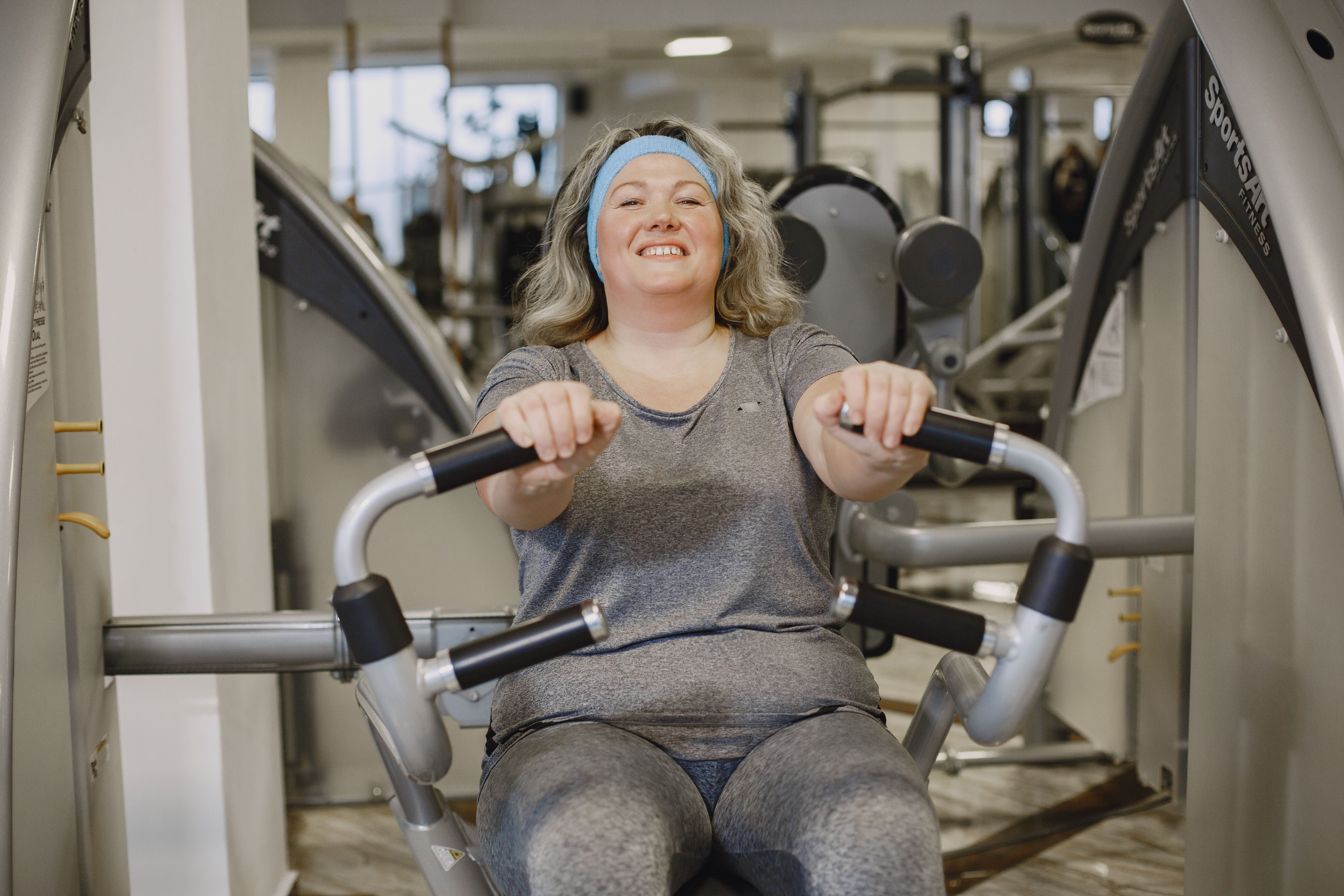
Dr Stuart McGill, the spine biomechanist, is one of the strongest voices for caution with machines. His stance is “Train the motion, not the muscle” (McGill, p. 44), because the body is built for movement patterns rather than disconnected, isolated muscles.
In his book Ultimate Back Fitness and Performance, he gives seated leg presses as an example: many of them, he says, flex the lower back while it is under load, and he rarely recommends them. He is not against every machine, and this is his reasoning from biomechanics, not the result of a trial comparing machines with free weights.
Physical therapist and strength coach Jeff Cavaliere (ATHLEAN-X) is also critical of the leg press. His concern is hip flexion at the bottom of the movement with little hip extension, and he argues it is poor for the glutes, which is exactly what many people use it for.
After taking these opinions on board, I generally chose not to use the leg press with my own clients, especially when we have so many options without the same concern. In certain circumstances I did use it, such as loaded very lightly as part of a warm-up.
A different view on machine based training comes from the American Council on Exercise, in information they produced (2009). It says knowing correct technique is important to avoid injury when opting for free weights, and suggests beginners start with machines.
Then there is a 2023 systematic review of 13 trials by Haugen et al, which compared the two directly. It notes that the American College of Sports Medicine argues machines may be safer because they demand less skill. However, the authors say that from what they found, it is uncertain whether injury risk actually differs.
The upshot? Machines may be more beginner friendly, but the safety evidence isn’t settled.
What about the results?
This is what it’s all about, isn’t it? We’ve looked at safety and what’s suitable for beginners. What about getting the results you want?
The answer is fairly simple: muscle growth and strength improve whether you use free weights or machines.
The American College of Sports Medicine’s 2026 position stand, which pulled together 137 systematic reviews covering more than 30,000 people, found that the type of equipment did not consistently change outcomes. What counted was training all the major muscle groups at least twice a week, with progressive effort (Currier et al, 2026).
Heidel et al (2022) reached a similar conclusion in a systematic review and meta-analysis. Free-weight training does better on free-weight tests, and machine training does better on machine tests. On neutral measures of strength, power and muscle growth, there was no difference. The Haugen review agrees. One caution: 789 of its 1,016 participants were men aged 18 to 60, so we know less about women and older adults.
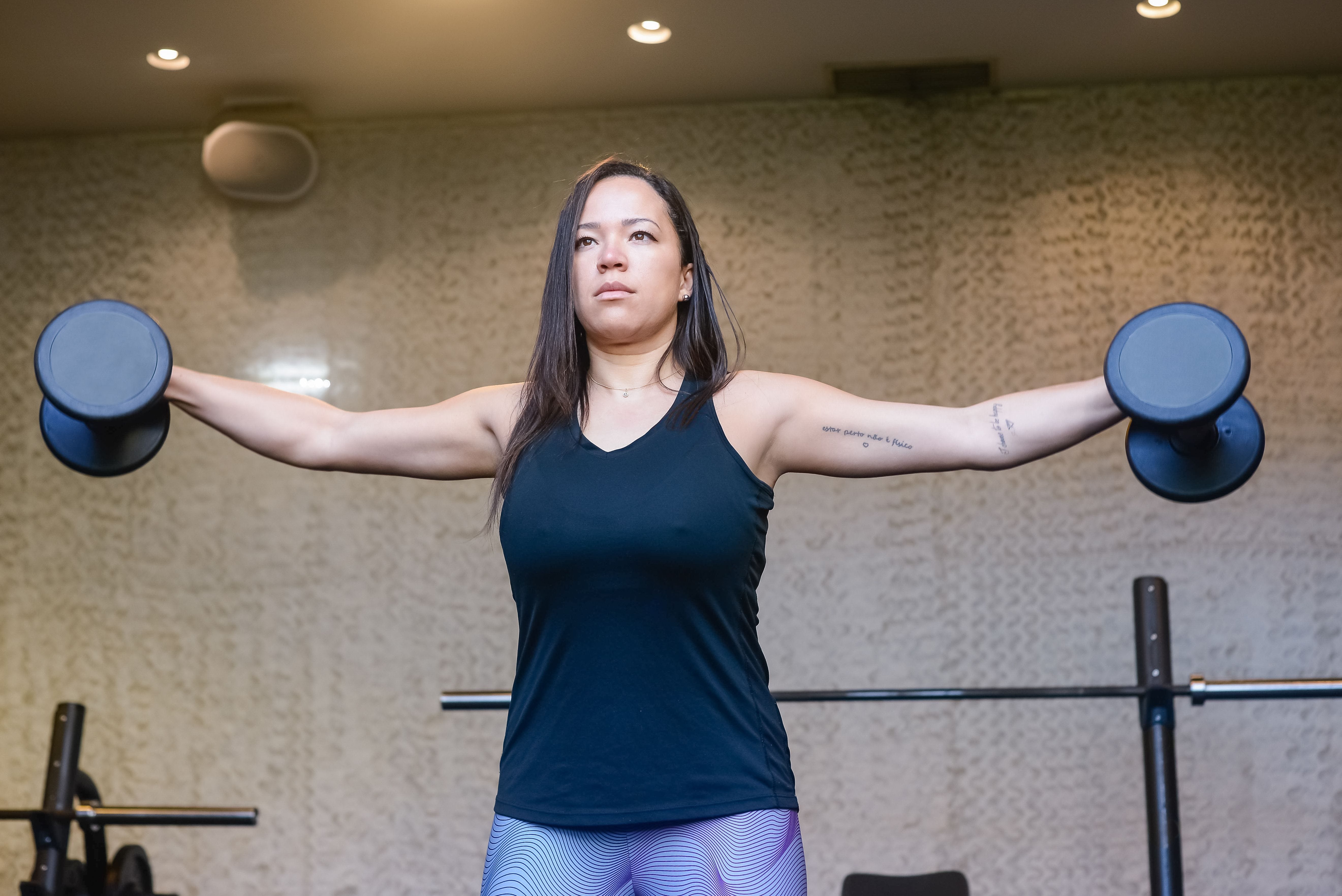
The takeaway? For general health and strength, choose what you prefer, and what you’ll keep doing.
It’s worth keeping in mind that you get good at what you practise. Keep practising deadlifts with good form, and you may become a superstar deadlifter with a strong back and posterior chain. Keep practising a machine chest fly, and you’ll hopefully become great on that machine, with the pecs to show for it.
To note though: skills don’t always carry over. As an illustration (not a study finding), you may have built a strong leg press, where the machine holds you in a fixed seat and path. Then, you stand up from a low sofa or step off a high kerb, where you have to control your own balance, and your body hasn’t practised that.
Strength is specific to what you train. This is important to understand.
So why do I mostly use free weights now?
As I said, my reasons come from my own goals and limitations. I already mentioned the left/right imbalance, so I try to keep training with this in mind, making sure I use my limbs independently to maintain their equal strength, and for me, free weights feels a more natural way to do this.
I also have compression in my thoracic outlet which is worsened by certain movements like lifting above my head or when my shoulder and arms are in certain positions. Lat pulldowns and machine chest flies aggravate it for me, and so I avoid these completely.
I also like to challenge my balance and find that using free weights helps to develop this much better. I try to add single leg work into most sessions. Plus - I only have so much time. Why do a leg extension on the machine which targets the quads, when I can do Bulgarian split squats which work the quads and glutes, and give me balance practice at the same time?
And the couple of machines I’ve kept? I use the cable row because I can strengthen my lats without pulling from above, and I like the cable machine overall because it can offer the benefit of both machine and free weight training (exercises where you stand and have to position yourself, rather than be in a fixed position). Cables are like a middle ground.
I also sometimes use the seated hamstring curl - it provides a simple way to really target hamstrings in a session, which can often actually get overlooked.
Your reasons will be different. But the point is, you have made your choice between free weights or a machine with a specific goal or outcome in mind.
Pros and cons: machines vs free weights
My take, based on what I’ve learned and how I train.
Machines:
Pros
Easier to learn. The path is guided, so you can focus on pushing or pulling rather than where the weight goes.
Built-in safety. Dropped weights are the main cause of weight-training injuries, and machines mostly prevent that. (The evidence overall is still unsettled, though.)
Good for isolating a muscle. I still use the seated hamstring curl because it targets hamstrings simply, and they’re easily overlooked.
Support when you need it. Useful if you feel unstable or are coming back from injury.
Quick to use. You change the weight with a pin and move from one to the next.
Cons
One fixed path. It may not suit your body. This is why Dr McGill is cautious, and why lat pulldowns and machine chest flies aggravate my thoracic outlet.
The stronger side takes over. That’s what happened with my left arm on the chest press.
Less balance and coordination work.
Sized for the “average” person. If you’re shorter or taller, some machines are awkward.
Often just one exercise per machine.
Free weights:
Pros
Each side works on its own. Dumbbells help even out a weaker arm or leg.
More balance and whole-body work. Bulgarian split squats train quads, glutes and balance in one move.
Flexible. You can adjust your position around a limitation. A few dumbbells go a long way, and they’re cheap and portable.
Easier to do at home. You can keep a small selection of dumbbells or kettlebells in your bedroom.
Cons
More skill needed. Technique matters more, and a coach helps.
Dropped weights can cause injuries.
Harder to isolate one muscle. It takes precise technique.
Easy to cheat. Swinging the weight uses momentum rather than muscle.
Overhead work is a problem for me. It’s one of the positions that worsens my thoracic outlet compression.
So where should you start?
Where does this all leave you?
If you have an injury or a health condition, check with your doctor or a suitably qualified instructor before starting any programme, whether free weights or machine-based.
If you’re recovering from an injury or you’re an absolute beginner, your first foray into gymdom could certainly begin with machines. Only start using them once you know how, though, so get an induction from someone qualified.
If you have strength imbalances, bring in the dumbbells. They worked wonders for mine, but be patient, because it takes a long time to catch up.
If you’d like your strength to carry over into everyday life, include movements like squats, hinges, pushes and pulls. Free weights, once you know how, help with this.
Whichever you choose, train all your major muscle groups at least twice a week, and keep making it gradually harder.
Do you currently prefer free weights or machines? Tell me in the comments which, and why!
Want to become unbreakable?
Exciting news!
Coming in early 2027 is my 8 week course, Become Unbreakable: Future-proofing Your Body for Women After 40. No obligation to be on the course by joining the early bird waitlist, but if you decide it’s for you when the time comes, you’ll be eligible for my early bird offers and bonuses!
Disclaimer:
This content is for educational purposes and isn’t a substitute for medical advice. I am not a clinician. Please check with your doctor before trying new exercises or taking health advice on this page; especially if you have osteoporosis, a diagnosed condition, or any concerns about your health.
References
American Council on Exercise (2009). Fit Facts: Free weights vs. strength training equipment.
Cavaliere J. (2022). Glute exercises ranked | Hamstrings (best to worst!). ATHLEAN-X, YouTube, 17 July. https://www.youtube.com/watch?v=1jp2uhfO8M0
Currier BS, D’Souza AC, Fiatarone Singh MA, et al. (2026). American College of Sports Medicine position stand. Resistance training prescription for muscle function, hypertrophy, and physical performance in healthy adults: an overview of reviews. Medicine & Science in Sports & Exercise, 58(4), 851-872. https://doi.org/10.1249/MSS.0000000000003897
Haugen ME, Vårvik FT, Larsen S, Haugen AS, van den Tillaar R, Bjørnsen T. (2023). Effect of free-weight vs. machine-based strength training on maximal strength, hypertrophy and jump performance: a systematic review and meta-analysis. BMC Sports Science, Medicine and Rehabilitation, 15:103.
Heidel KA, Novak ZJ, Dankel SJ. (2022). Machine and free-weight resistance training: a systematic review and meta-analysis. Journal of Sports Medicine and Physical Fitness, 62(8).
Kerr ZY, Collins CL, Comstock RD. (2010). Epidemiology of weight training-related injuries presenting to United States emergency departments, 1990 to 2007. American Journal of Sports Medicine, 38(4), 765-771.
McGill S. Ultimate Back Fitness and Performance. [5th edition, 2014; pp. 43-45.]
What a fantastic article that really demonstrates how to make weight training work for you, for your specific goals and also your specific limitations.
With frozen shoulder and bursitis in the same shoulder, I struggle with anything requiring me to raise my arms above my head as this aggravates it and sets me back to square one.
"Choose what you prefer, and what you'll keep doing" is the part most people skip. So many women stall because they think there's one correct way to start. Machines are often what gets people through the door, and that counts for a lot.