

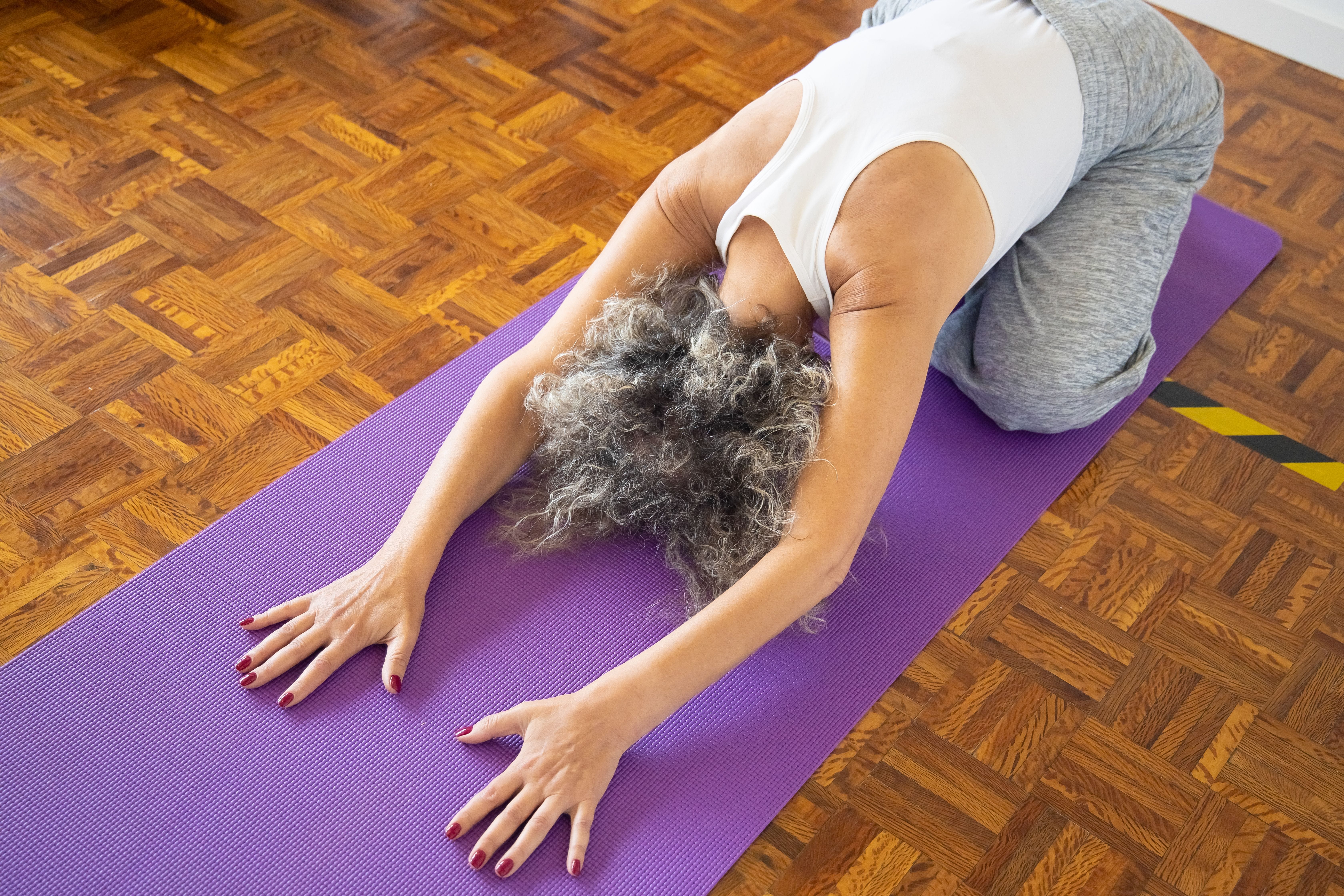
“I am elated!” said one of my back care students the other week, as soon as class had finished. “I never realised I could manage this much!”
This is the moment I look forward to at the end of any session: when even one person approaches me before they leave, to share a discovery about their body.
Sometimes it’s about pain reduction, like the lady I’ve mentioned before who has sciatica.
But often it’s simply about wonder. Surprise that their body is doing more than they expected. Amazement that it hasn’t given up on them. Delight at being able to push a little bit further.
On this most recent occasion, the lady in question had such joy in her face when she told me. Her eyes were shining and she had the biggest smile, as if it were Christmas morning and she was five.
She’s not doing cartwheels across the studio, nor headstands. She is simply able to join in with most things at her own pace: a few light squats, getting up and down off the floor, some bird dogs and several glute bridges.
And this is incredible for her. Which it should be, because many older people can no longer get in and out of a chair unassisted, never mind up and down from the floor.
Movement matters
In one large European study that followed 52,541 adults aged 50 and over, 18.6% (nearly one in five) reported difficulty getting up from a chair after sitting for a long time. Those who did had higher odds of later reporting a lower quality of life, depressive symptoms and osteoarthritis (Hussain et al, 2026). The difficulty was self-reported and the study was observational, so it shows an association, not a cause.
Being able to get up from the floor matters too.
In a study of 2,002 adults aged 51 to 80, people who needed more support from their hands and knees to sit down on, and rise from, the floor had higher mortality over a median of 6.3 years (Brito et al, 2014). That doesn’t prove the floor test itself changes anything; it is more likely a marker of overall strength, flexibility and coordination.
Don’t accept immobility
The idea that one shouldn’t “accept immobility” can sound flippant, I know. I don’t mean to be dismissive. When you’re struggling with movement, someone coming along to tell you not to “accept it” can be a tad irritating.
But a phrase used among health, fitness and medical professionals is that “immobility is the kiss of death”. It sounds dramatic, yet there is a reason it gets said. Muscle loss and weakness appear very rapidly with disuse, including bed rest (Marusic et al, 2021).
And in older adults, measures of physical capability such as grip strength, walking speed and chair rising are linked to the risk of dying from any cause (Cooper et al, 2010).
In my experience as a personal trainer working with people who have health conditions, many believe they can do less than they are able to. It is only when they give things a go that they learn what they can achieve.
Of course, they also learn what may be too difficult right now, or perhaps always. You may have structural differences in your bones, for example, which limit some movement patterns because your body cannot move in that way.
But for many, the reason they don’t move is their belief about what their body can do, or a keenness to protect themselves from pain.
In a safe, structured programme, a qualified and experienced instructor like myself would not push you beyond your capacity. Instead, you would be encouraged to take gradual steps that teach you how much more you can do than you think.
We also need to understand that hurt doesn’t necessarily mean harm. Sometimes, in order for the hurt to ultimately get less, we have to tolerate some level of discomfort. See the section at the end of this article to tell acceptable discomfort from red flag pain.
How to find out what you can manage
You don’t need a class to start finding out. Here is a gentle, non-scary way to begin.
Start with a chair. Stand up from a sturdy chair and sit back down slowly. Use your hands on your thighs or the chair arms if you need to. Notice how it feels, not how many you can do.
Choose one movement you have been avoiding. A glute bridge, a squat to a chair, trying to balance on one leg; whichever you’ve been putting off.
Do a smaller version of it. Reduce the range, slow it down, or add support. The version you can repeat is worth more than a bigger one you can’t.
Check your response against the list at the end. Mild, familiar discomfort that settles is one thing. Sharp pain, swelling or symptoms that are worse the next day are a signal to stop.
Repeat it a few times a week and write down one thing that feels different. It might be tiny. That’s fine.
If you have persistent pain, a health condition or a recent injury or operation, speak to your GP or physiotherapist before you start.
Patience and persistence
The lady in my back care class found she was improving as each week went by, able to do that little bit more every time. A consistent approach was what worked for her, and she came even when she didn’t feel like it (if you struggle with “motivation”, I’ve written an article for you).
She was patient and persistent, and this is what matters. You can’t rush health and fitness. We may live in a quick-fix culture, but if you want a long-term, sustainable strategy for your mobility goals, patience is your friend.
Quick fixes rarely come without downsides, too, so it is always worth looking at other options.
This is anecdotal, but a few of my PT clients have told me that corticosteroid injections for knee pain gave them welcome short-term relief, followed by problems later on.
The research is mixed, and a single injection is not the same as repeated ones. In a two-year trial of 140 people with knee osteoarthritis and signs of inflammation, injections every three months led to more cartilage loss than saline injections, with no significant difference in pain (McAlindon et al, 2017). The lead author has said he wouldn’t want those results to discourage occasional injections, which can help with short-term pain.
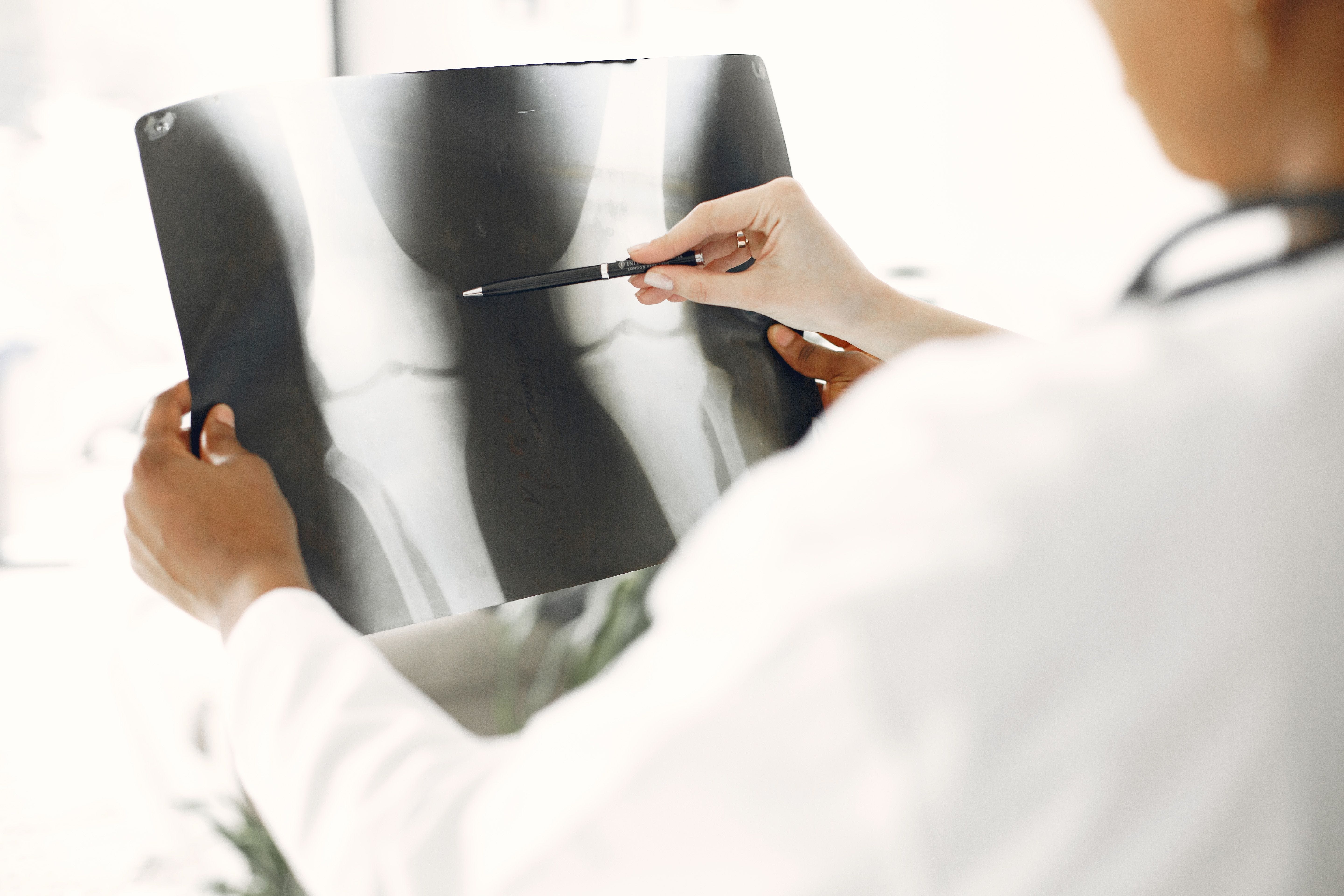
A later review of 459 hip and knee injections at one US hospital described less common problems in some patients, including accelerated arthritis, stress fractures beneath the cartilage, complications of osteonecrosis (death of bone tissue) and rapid joint destruction (Kompel et al, 2019). That was a single-centre, retrospective review, so it can’t tell us how often these happen.
I am not saying you mustn’t go down this route. Your own doctor is the best person to speak to about it. But it is a reasonable question to ask whether non-invasive options are worth trying first, if that is open to you.
So, coming back to my back care classes, the best moment is definitely when people report that they can do so much more. This feeds a more positive belief cycle about themselves, and they start to do more in life. Life improves.
And let’s face it, helping people to have a better quality of life is the ultimate goal of any fitness professional.
I would love to know more about you. What can you do now that you didn’t think you could before? Or has this article persuaded you to give some movement a go? Please let me know in the comments.
Your next step: choose one movement you’ve been avoiding and try a smaller version of it this week. And if you’d like structured guidance, join the waitlist for my Become Unbreakable course, launching in early 2027!
Movement and exercise: what pain is okay and what isn’t?
Guidance from physical therapy frameworks, such as Physio Info and NHS authorities, can help us to work out what is safe movement and what might be harmful.
Acceptable hurt (safe to continue)
Low-level, familiar ache or discomfort (typically rated around 2 to 4 out of 10) during or right after exercise.
Pain that fades or warms up as you continue gentle movement.
Discomfort that settles within 24 hours and does not leave your joint or tendon more irritable the next day.
Delayed onset muscle soreness (DOMS) that feels diffuse and widespread rather than sharp and localised.
Problematic harm (stop and reassess)
Sharp, stabbing or blocking pains that get progressively worse during the session.
Pain accompanied by swelling, joint instability, giving way or severe locking.
Symptoms that escalate the next day (worse baseline pain, increased stiffness or high irritability).
Acute, fresh post-operative or high-acuity trauma where a doctor or physiotherapist has strictly advised complete rest.
If pain is persistent, or you are worried, speak to your GP or physiotherapist.
Want to become unbreakable?
Exciting news!
Coming in early 2027 is my 8 week course, Become Unbreakable: Future-proofing Your Body for Women After 40. No obligation to be on the course by joining the early bird waitlist, but if you decide it’s for you when the time comes, you’ll be eligible for my early bird offers and bonuses!
Disclaimer:
This content is for educational purposes and isn’t a substitute for medical advice. I am not a clinician. Please check with your doctor before trying new exercises or taking health advice on this page; especially if you have osteoporosis, a diagnosed condition, or any concerns about your health.
References
Brito LBB, Ricardo DR, Araújo DSMS, Ramos PS, Myers J and Araújo CGS (2014) Ability to sit and rise from the floor as a predictor of all-cause mortality. European Journal of Preventive Cardiology 21(7): 892-898. https://doi.org/10.1177/2047487312471759
Cooper R, Kuh D, Hardy R, et al (2010) Objectively measured physical capability levels and mortality: systematic review and meta-analysis. BMJ 341: c4467. https://doi.org/10.1136/bmj.c4467
Hussain MA, Naheed S, Saeed K, et al (2026) Can difficulty standing from a chair signal early risk of chronic illness? Insights from a multi-wave European cohort. Calcified Tissue International 117: 50. https://doi.org/10.1007/s00223-026-01523-9
Kompel AJ, Roemer FW, Murakami AM, et al (2019) Intra-articular corticosteroid injections in the hip and knee: perhaps not as safe as we thought? Radiology 293(3): 656-663. https://doi.org/10.1148/radiol.2019190341
Marusic U, et al (2021) Nonuniform loss of muscle strength and atrophy during bed rest: a systematic review. Journal of Applied Physiology 131(1): 194-206. https://doi.org/10.1152/japplphysiol.00363.2020
McAlindon TE, LaValley MP, Harvey WF, et al (2017) Effect of intra-articular triamcinolone vs saline on knee cartilage volume and pain in patients with knee osteoarthritis: a randomized clinical trial. JAMA 317(19): 1967-1975. https://doi.org/10.1001/jama.2017.5283
This is lovely!
I'm only 46, but I've put movement on the back burner for the past two years, and God, do I feel it now. I had this dream of doing a dance solo alongside my daughters at their dance competitions... only to realize I can barely get up off the floor!! 😂
When you're trying to find your way back to a body that feels fluid, mobile, and strong, what do you think the priorities should be?
I teach a yoga class for a healthy back at a gym, and bird dogs and bridges are in there too. Your student sounds so happy, like a five year old on Christmas morning haha. I like your tip about doing a smaller version you can actually repeat. I try to give people easier options like that in my classes too 😊